
The ICE St. Moritz 2026: A Gathering of Legends
The automotive enthusiast community looks back on two days filled with emotion. Compared to last year’s event, The ICE St. Moritz 2026 shifted up several gears and, in many respects, made history. streetwheelz1 was on site and had already reported on social media (YouTube, TikTok, etc.) as well as in the news ticker on this website. What follows is the detailed event report. One thing became clear early on: there were many surprises, and the venue became a gathering of legends.
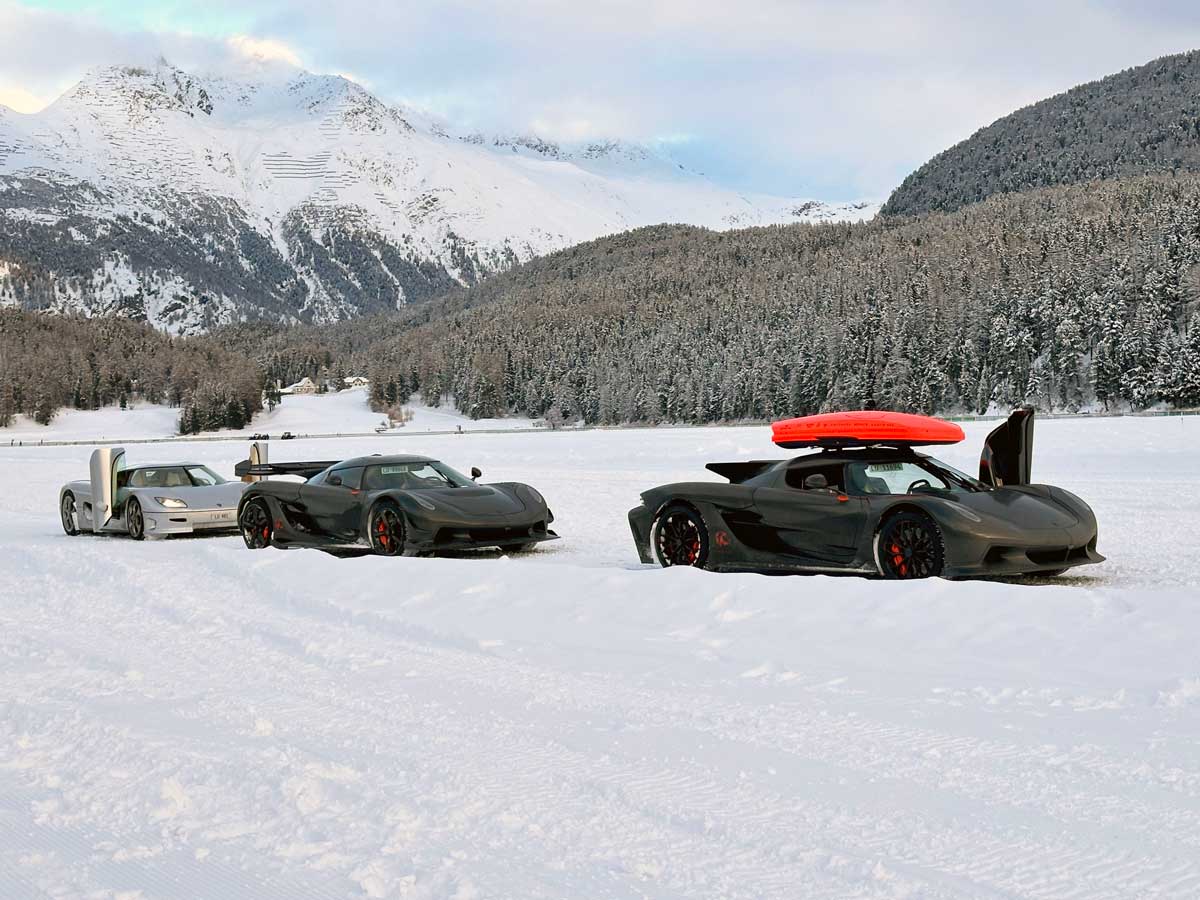
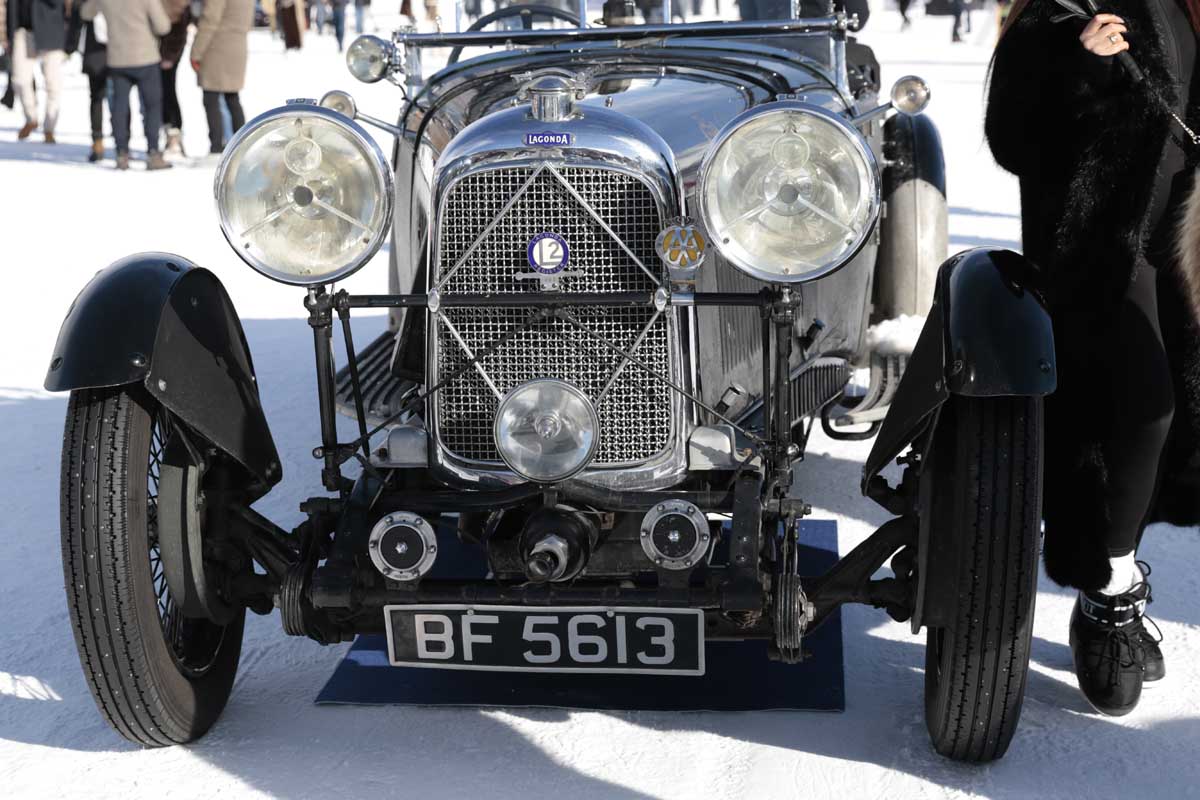
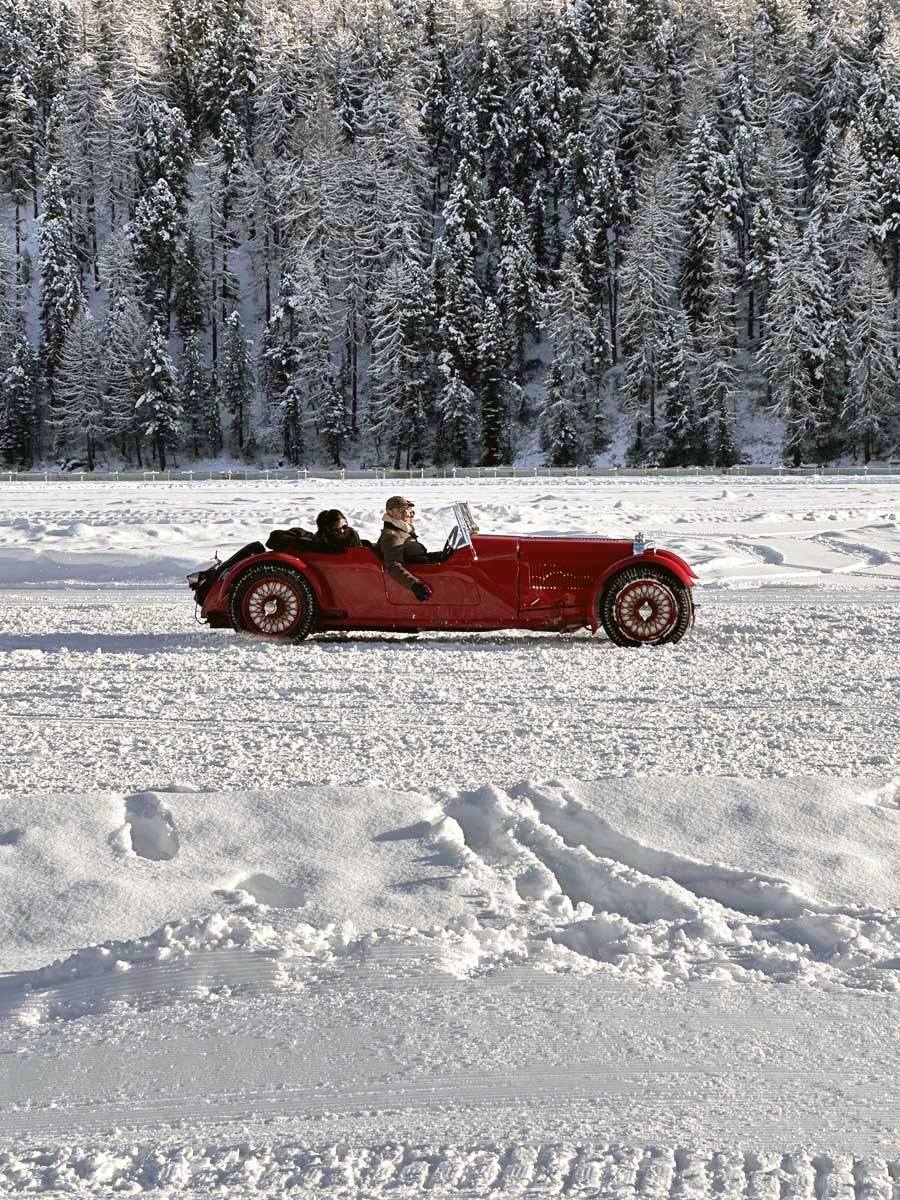
The sun was already low on the day before The ICE St. Moritz 2026. The atmosphere around the venue was relatively calm. A few hypercars had already made their appearance and a black Aston Martin Lagonda 2-Litre Tourer and a red Aston Martin International were circulating at a leisurely pace, acclimatising to the slippery surface. But suddenly, on this sunny afternoon in the snow-covered Engadin, events began to unfold rapidly.
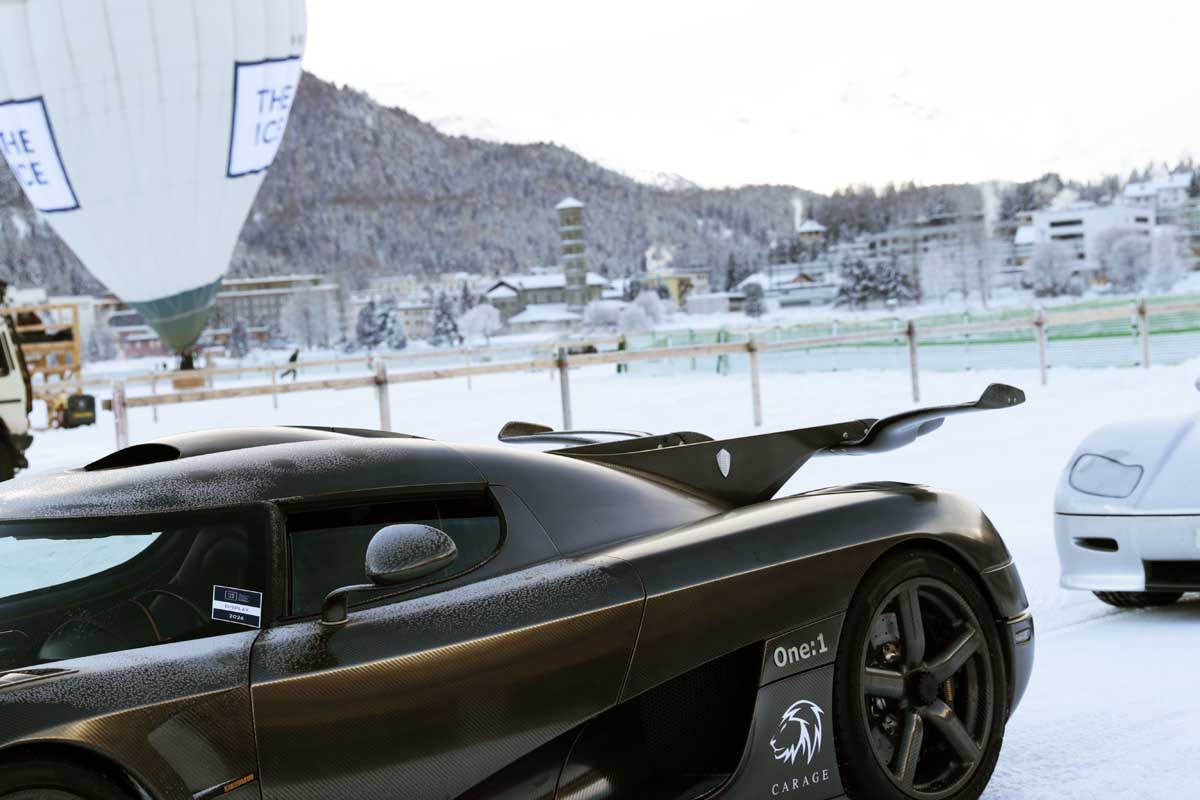
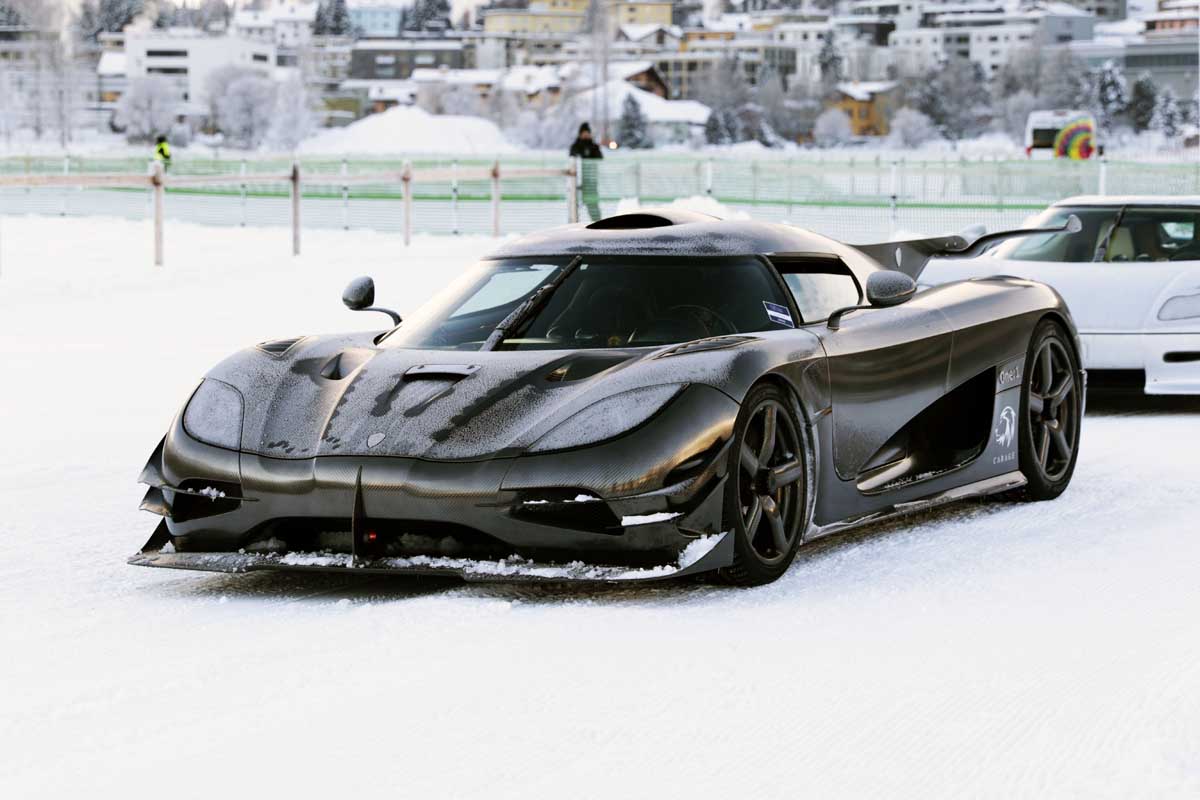
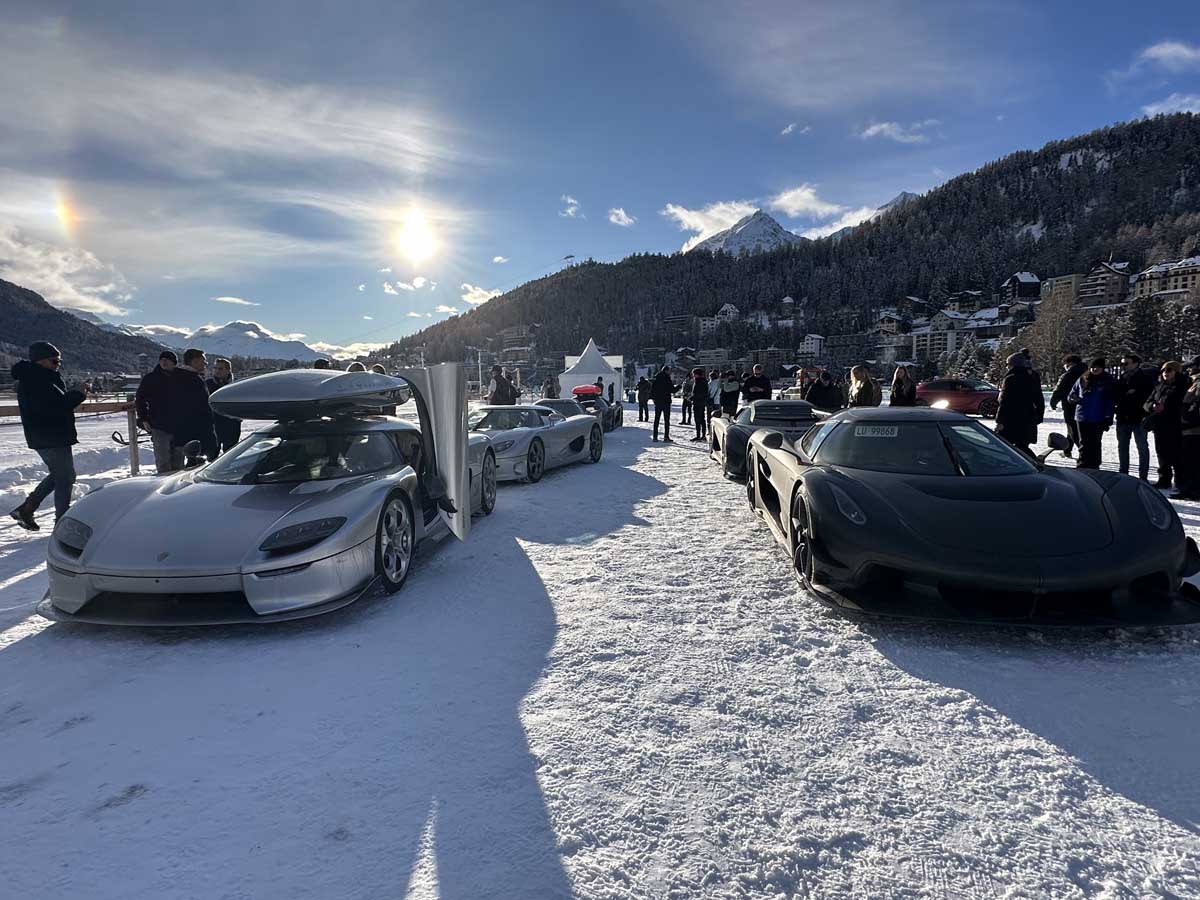
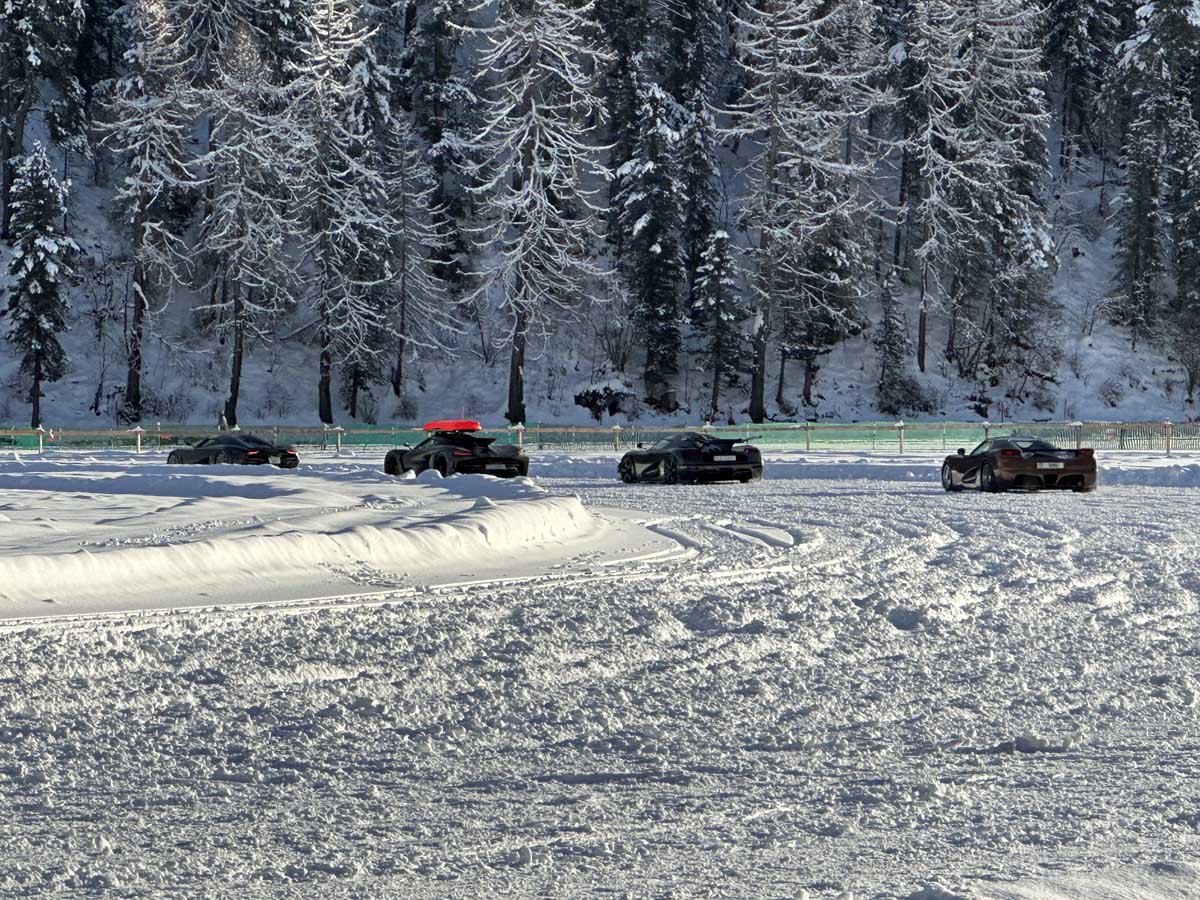
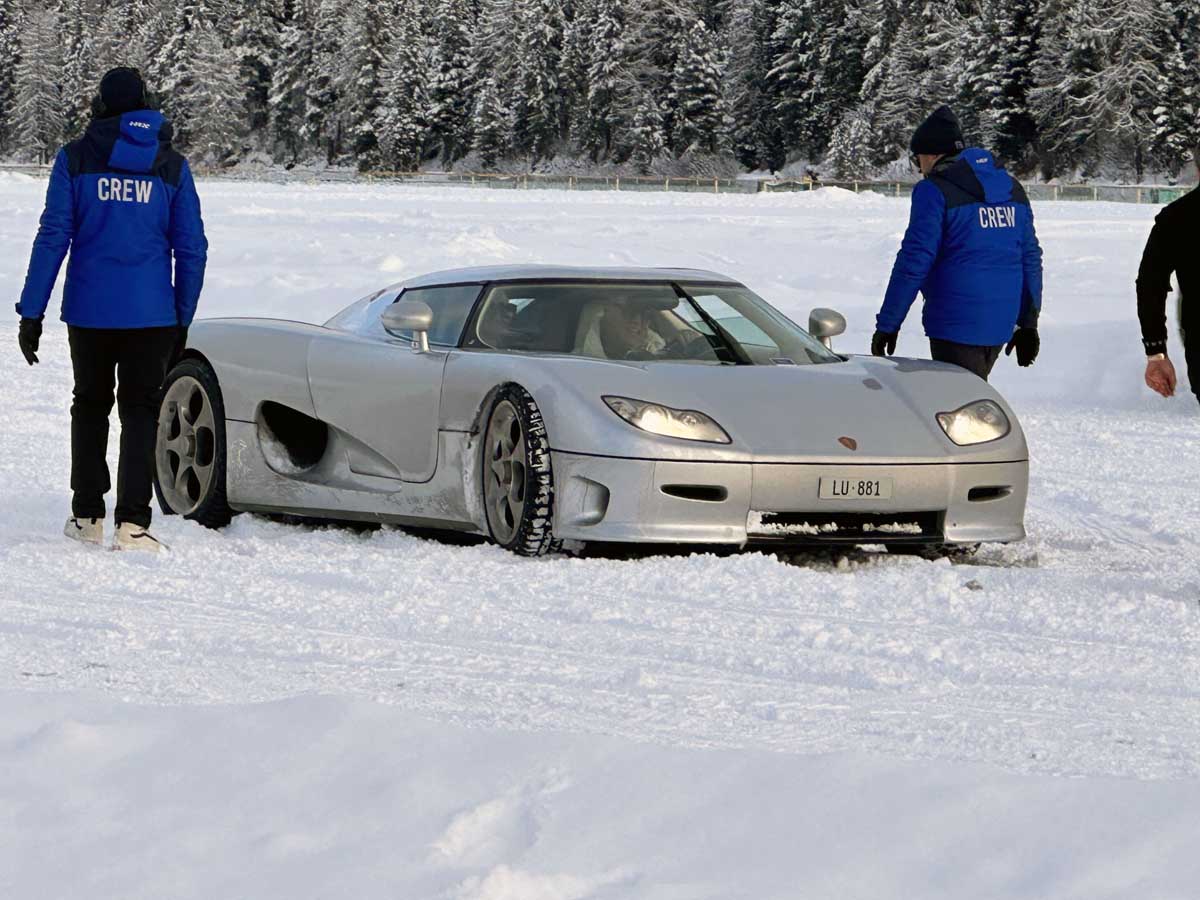
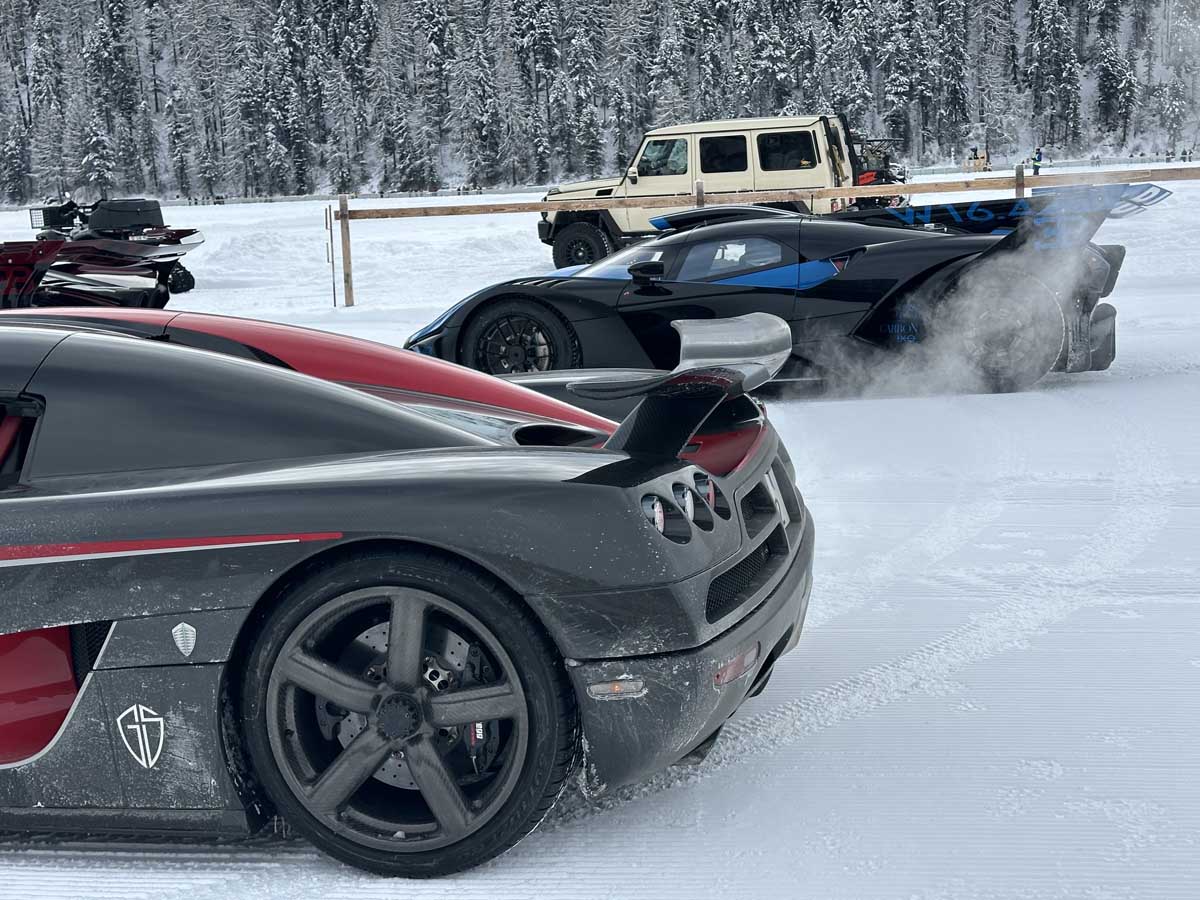
Excitement spread among car spotters, and extraordinary scenes played out on the frozen lake. A distinctive engine sound was suddenly heard, and a convoy of Koenigsegg models made its way through the crowd. In the end, not just one or two, but eight of these extremely rare and valuable cars stood on the ice, each worth at least as much as a single-family home: CC850, CC8S, CCX Edition, Absolut, Attack, Regera, One:1.
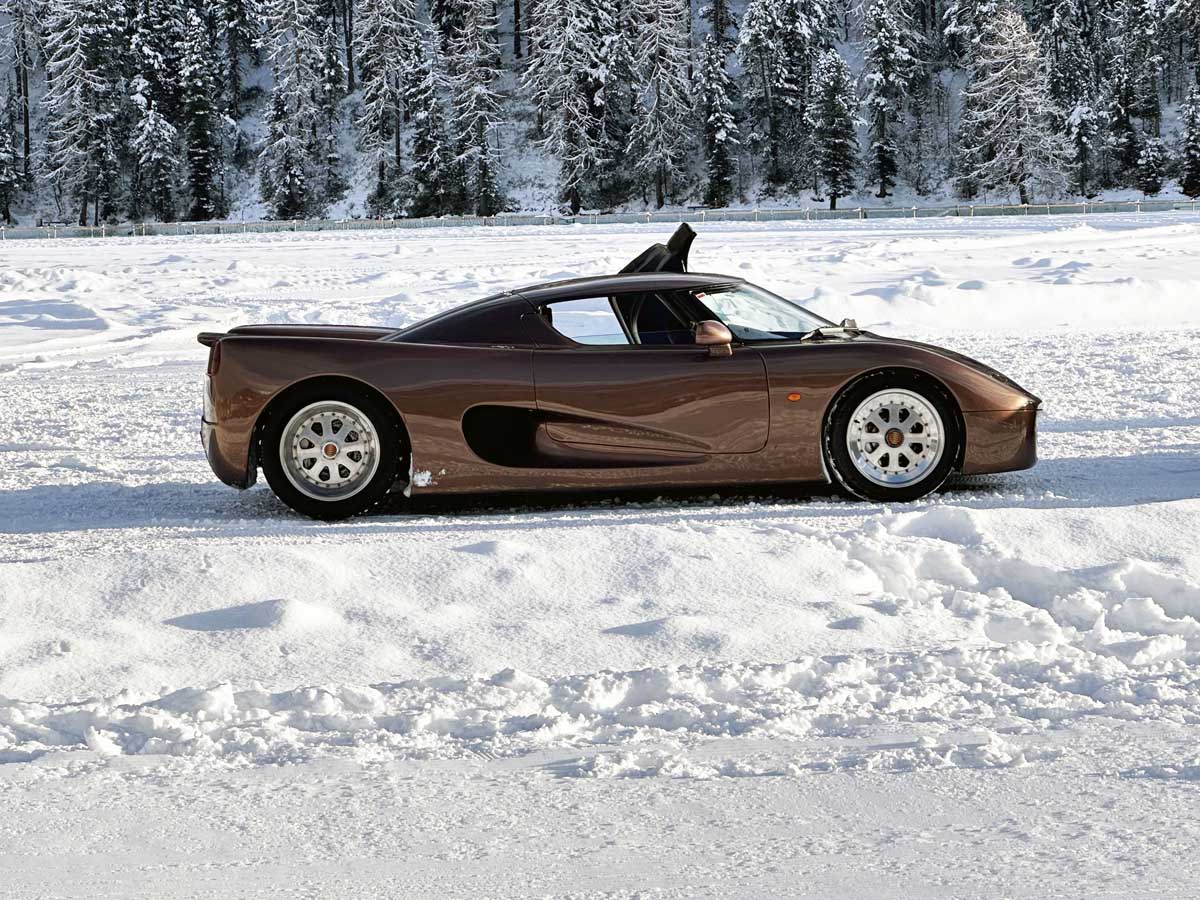
Even among this highly curated group, one car stood out clearly: the Koenigsegg CC prototype in dark metallic bronze, bearing Dubai licence plates. A priceless example that embodies everything Koenigsegg stands for. Courage, entrepreneurship, and foresight. The creation of a globally renowned luxury automotive brand. The vision of a young man who once decided to build his own hypercar. Now, more than thirty years later, belief in that daring idea has long since become established automotive history. The haze of uncertainty has given way to the certainty of having created one of the most important hypercar brands in the world.
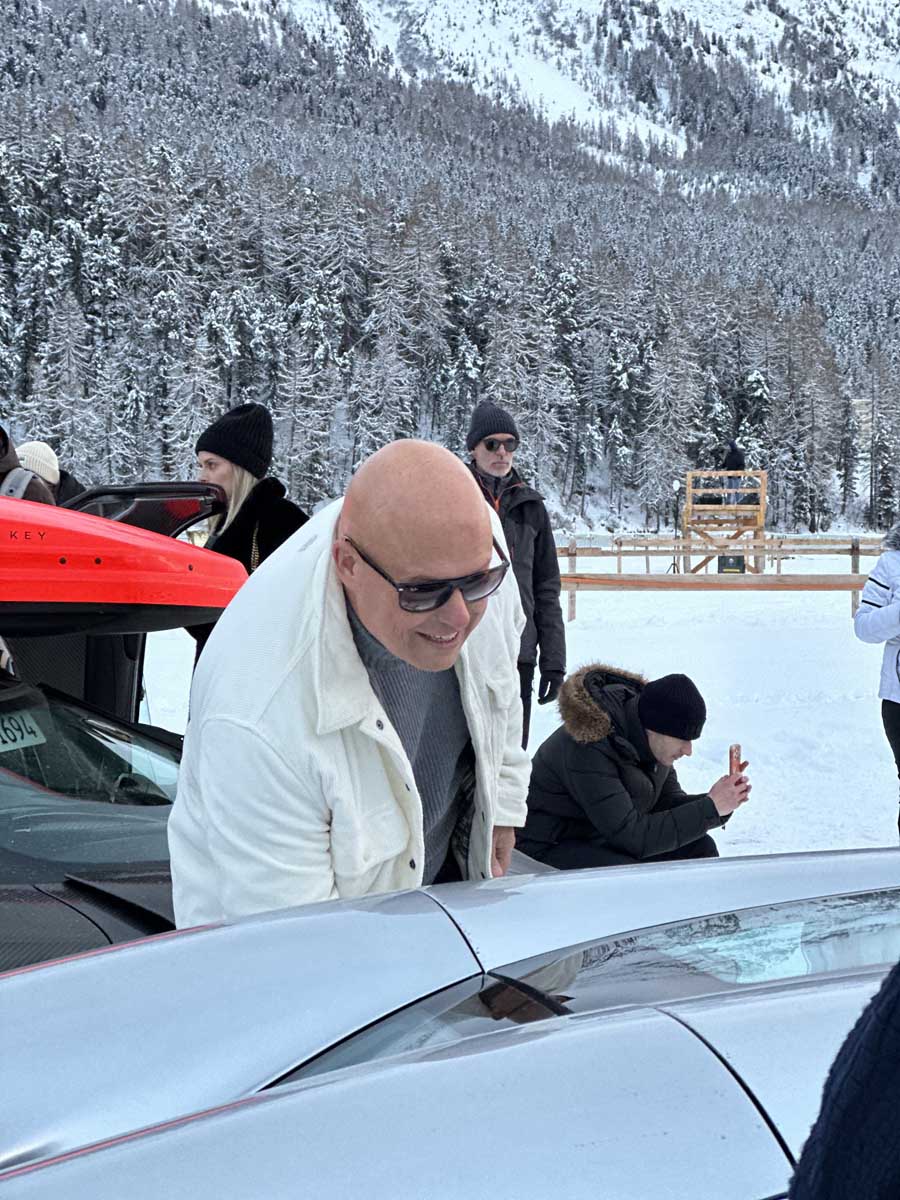
And the essence of that work was now present on the exclusive ground of St. Moritz, surrounded by dozens of fans. What could possibly surpass such a moment? Perhaps only the presence of Christian von Koenigsegg himself. And indeed, that is exactly what happened. After taking a few fan selfies and engaging in conversations, the visionary joined the convoy and headed to the race track for test runs. The Swiss Koenigsegg representative SIC Carage AG had truly pulled off a brilliant coup. Yet this would not be the only hypercar experience in the days to follow.
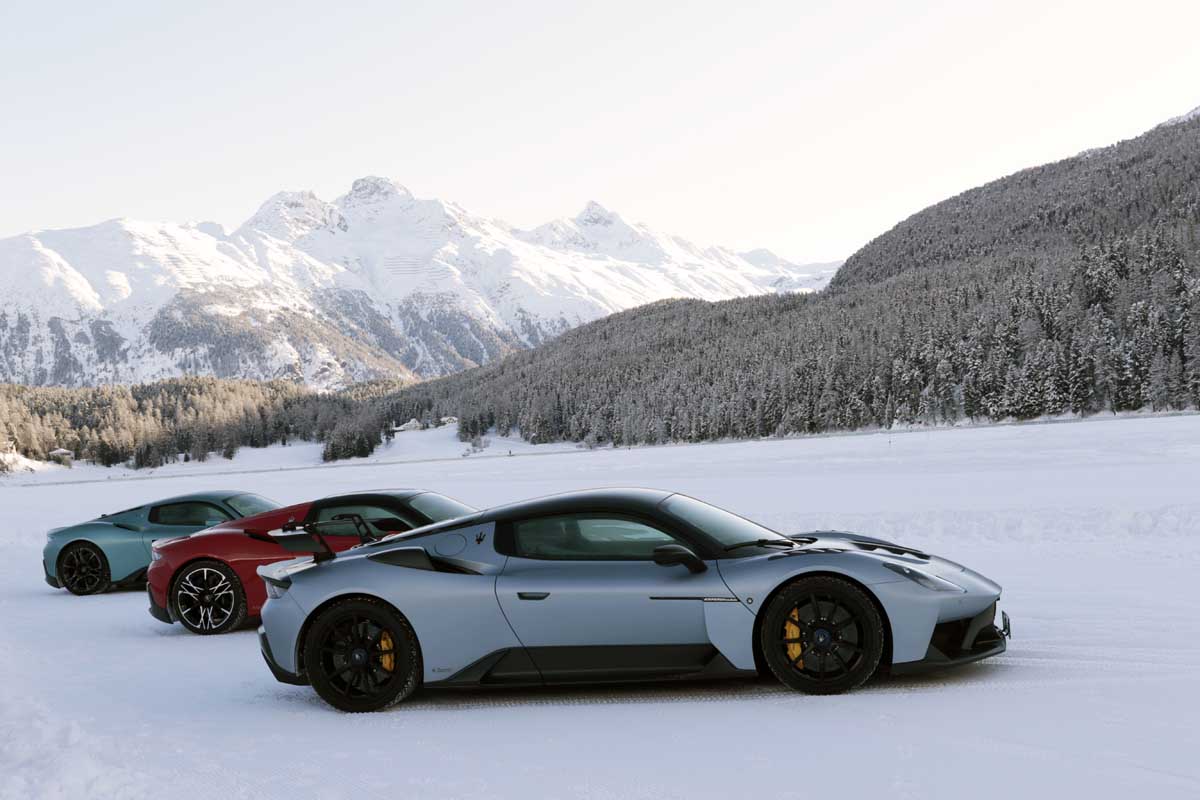
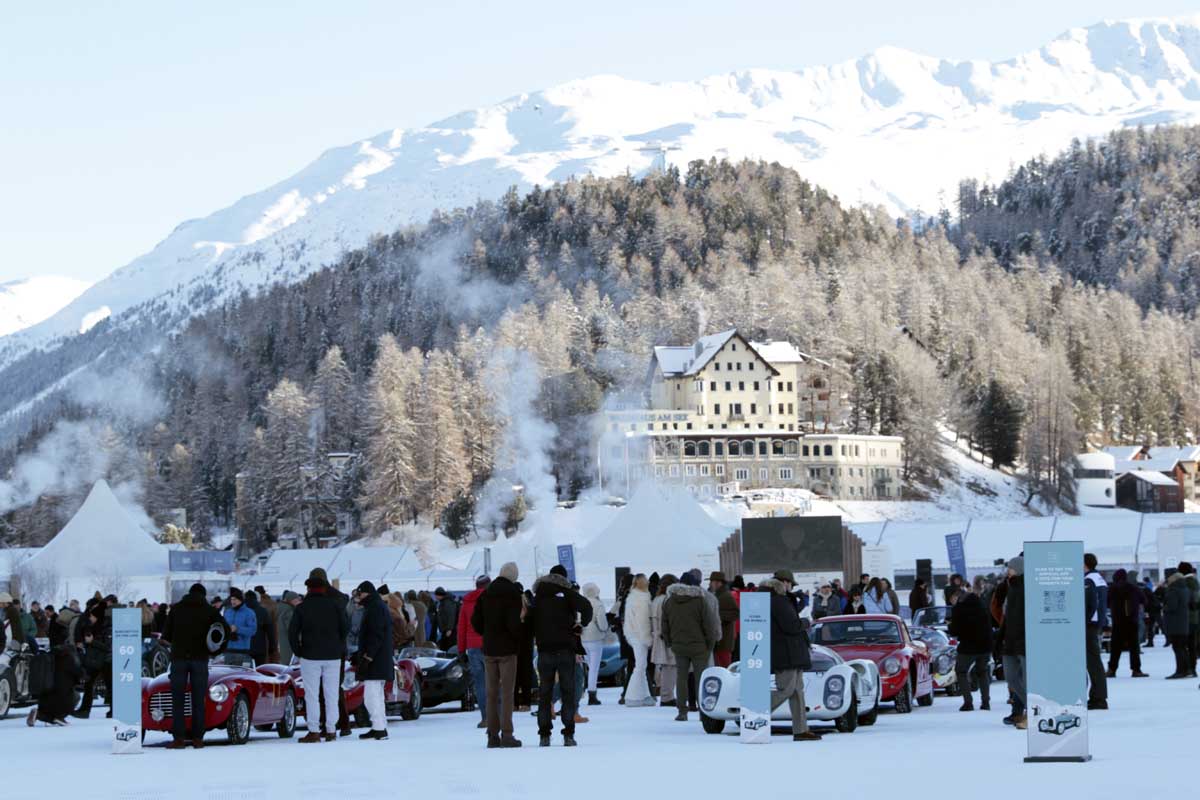
The ICE St. Moritz is arguably the highest-altitude automotive concours event in the world. Founded in 2019 as a tribute to earlier automotive events in St. Moritz, this international Concours d’Elegance format ranks among the most important gatherings of the classic-car community. Extremely rare collector’s items are presented here in the harsh winter climate. Prototypes, one-off examples, and museum pieces that are otherwise rarely seen—certainly not outdoors, and even less so in motion. The venue is both exclusive and luxurious, yet distinctly alpine, situated at around 1,822 metres above sea level. A cosy village surrounded by majestic, snow-dusted mountains, and in January frequented by winter sports enthusiasts skiing and snowboarding up on Corviglia.
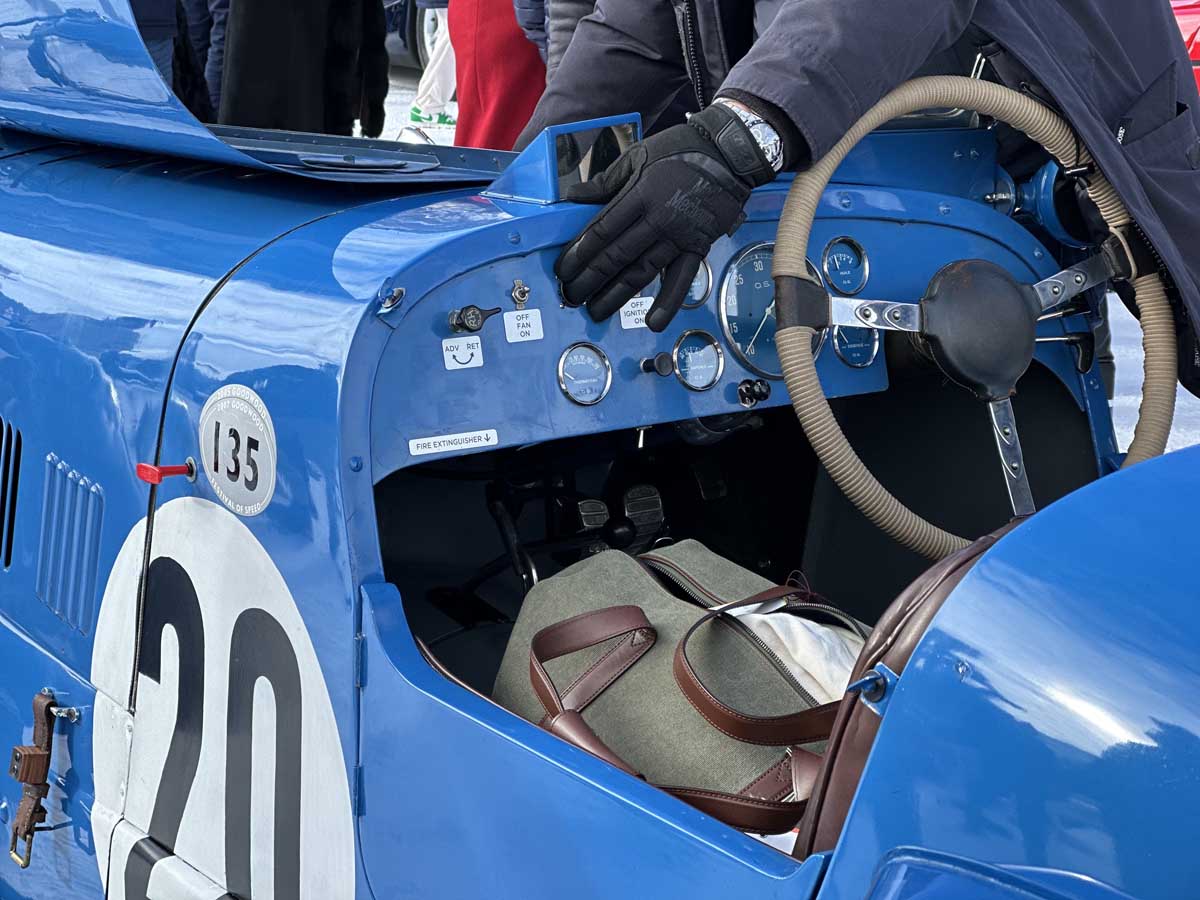
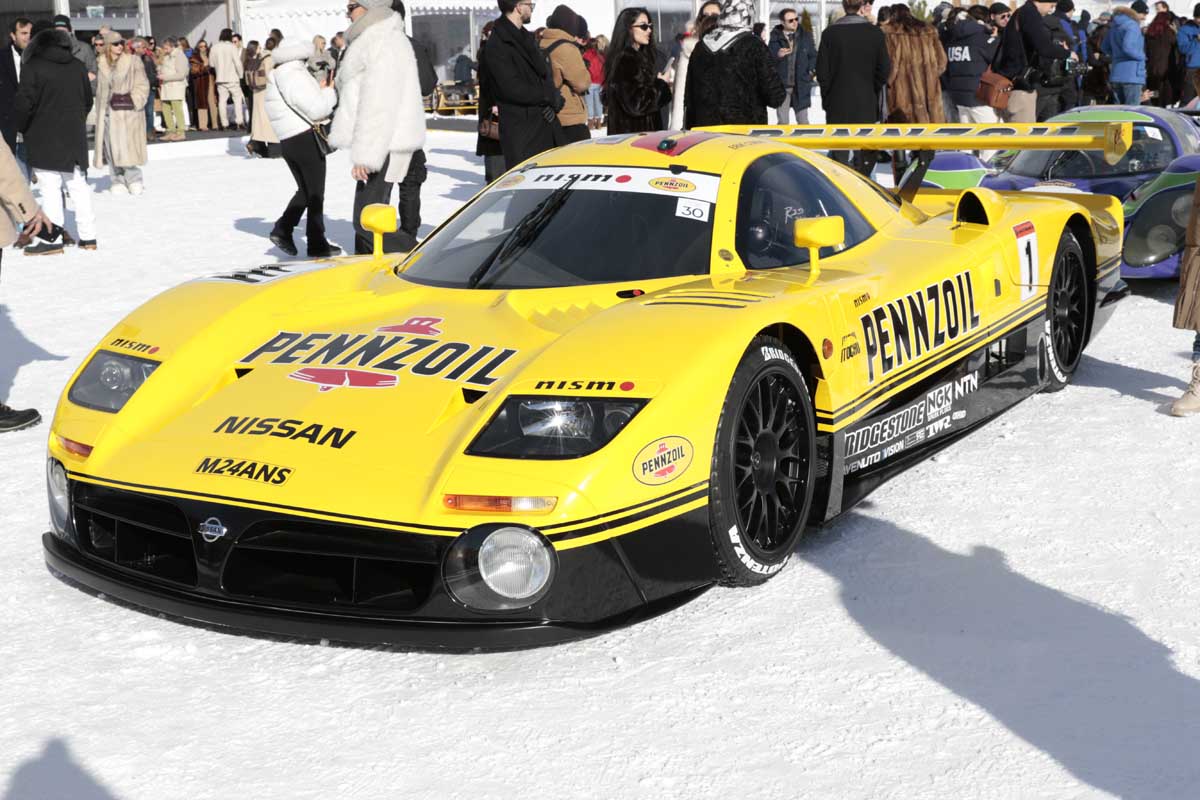
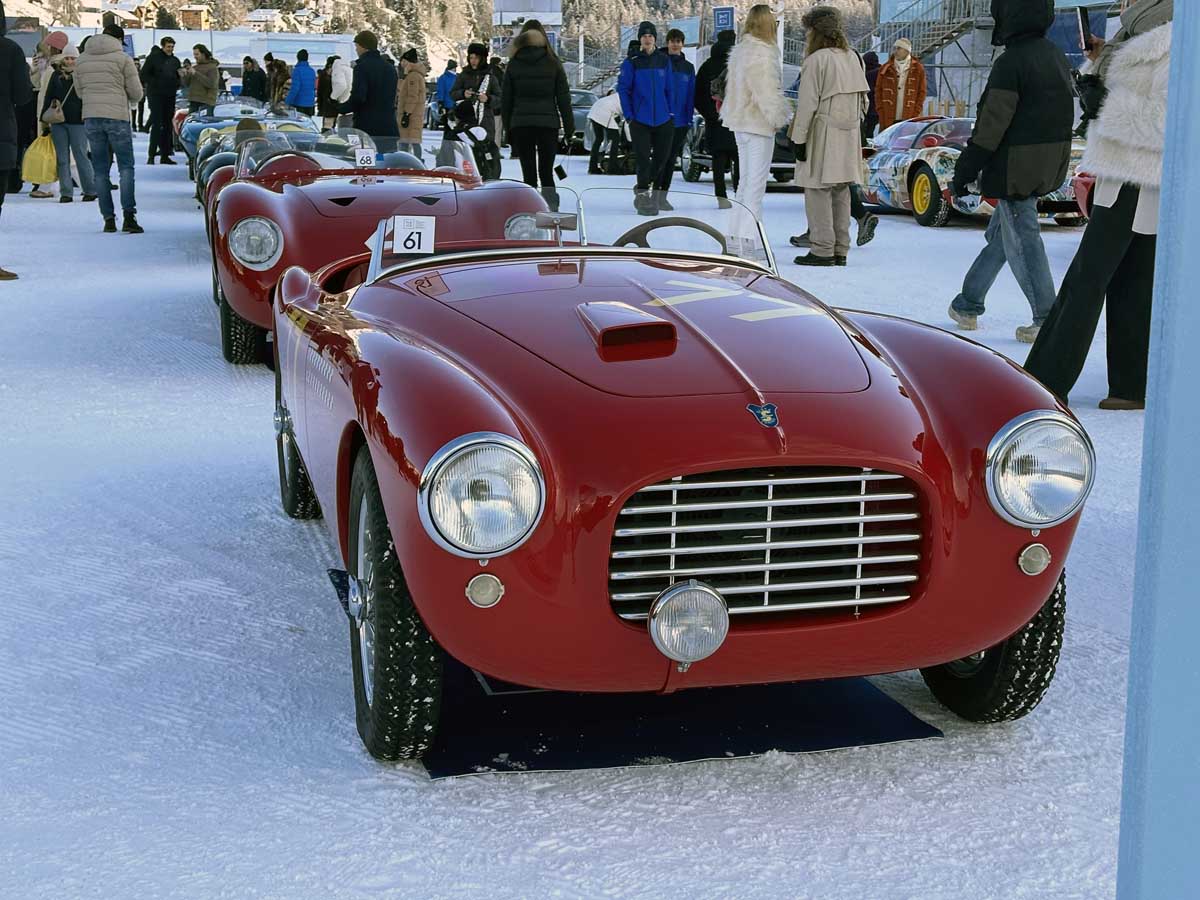
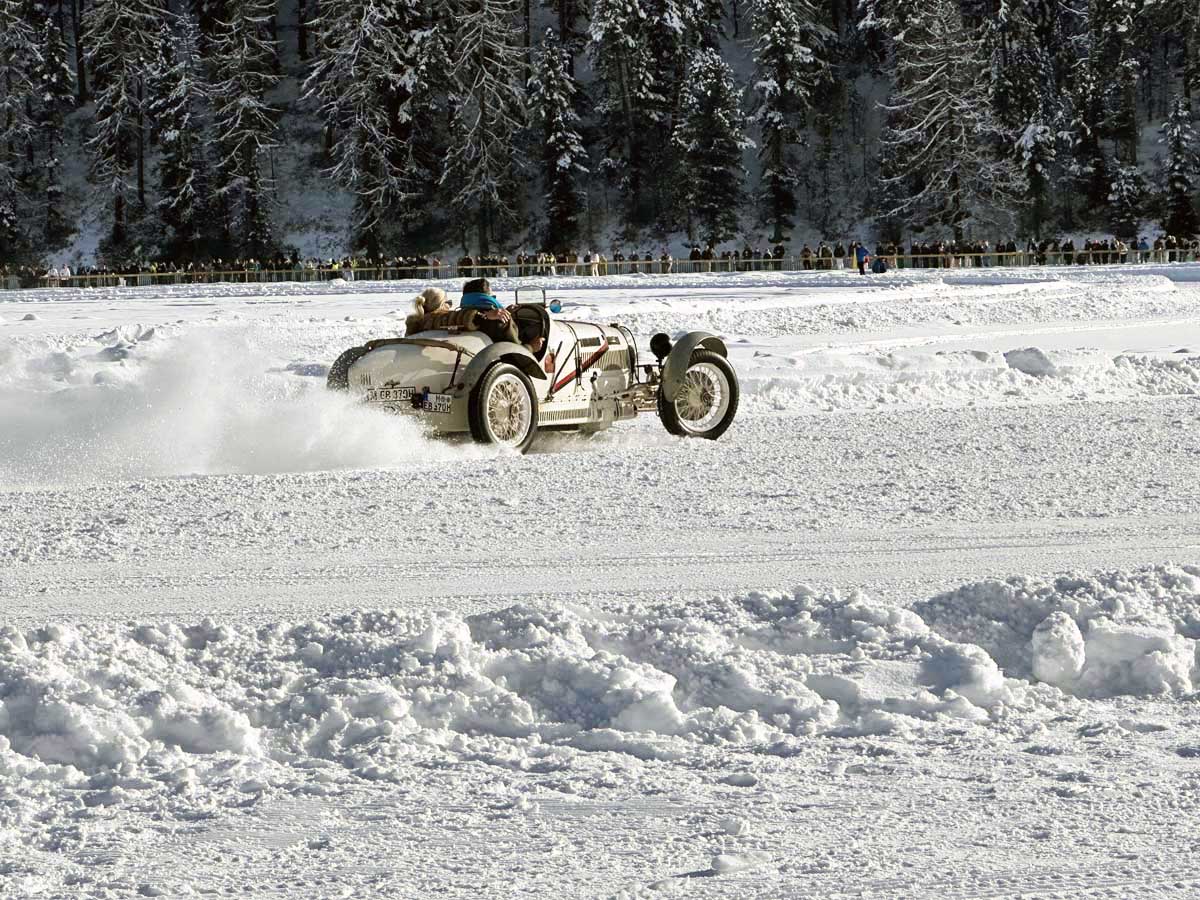
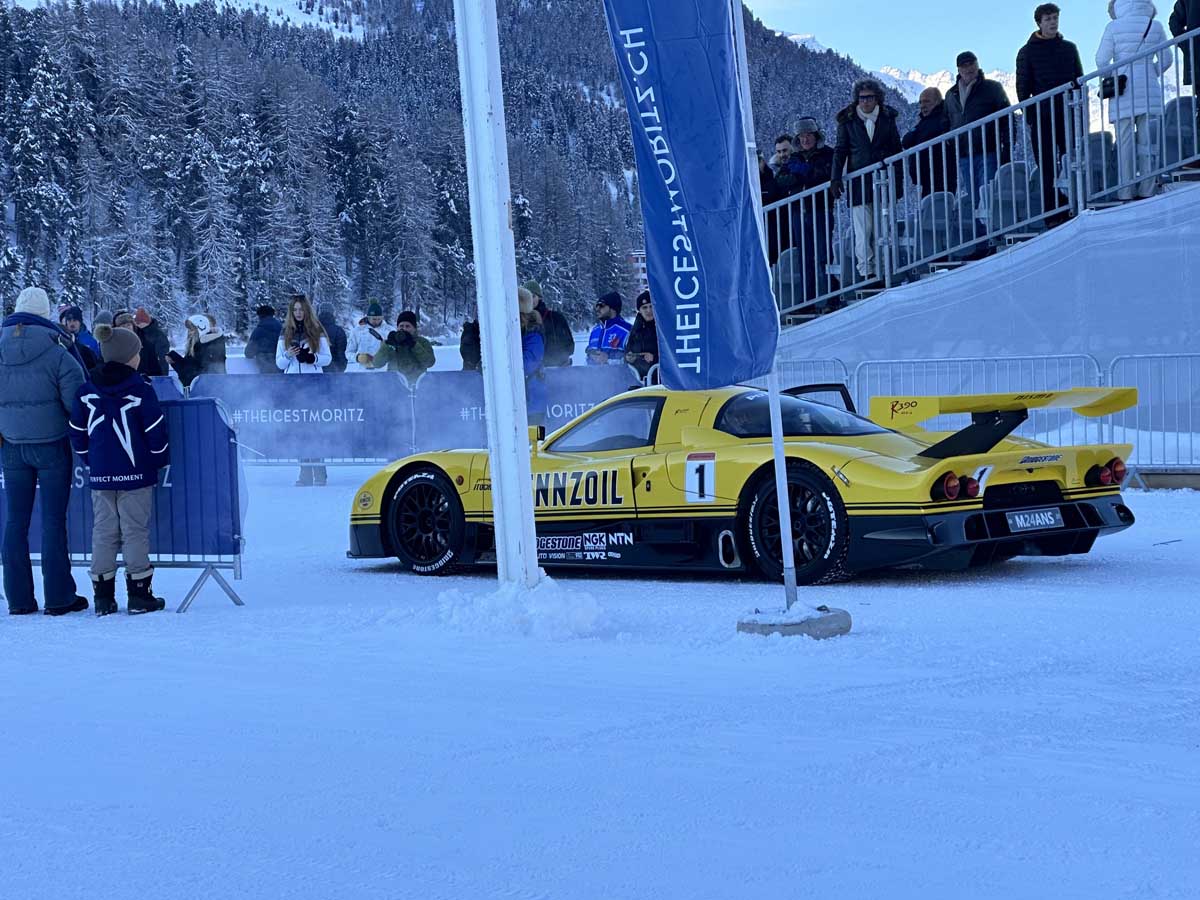
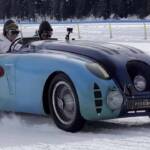
On Friday, the first official day of The ICE, the cars were presented under the theme “static display on the lake.” Around 50 classic cars stood on the frozen lake, some with open engines, others accompanied by engine sound. On a cold morning, still in the shadow of the surrounding mountains, the exhibited models already demonstrated their class. The model years stretched back as far as the early 1920s (Bugatti Type 13) and extended through to the late 1990s. Not only was a yellow Pagani Zonda C12 (1999) among the exhibits, but the aforementioned Koenigsegg prototype (1996) from the previous day’s convoy was present once again. Both are now considered classic cars.
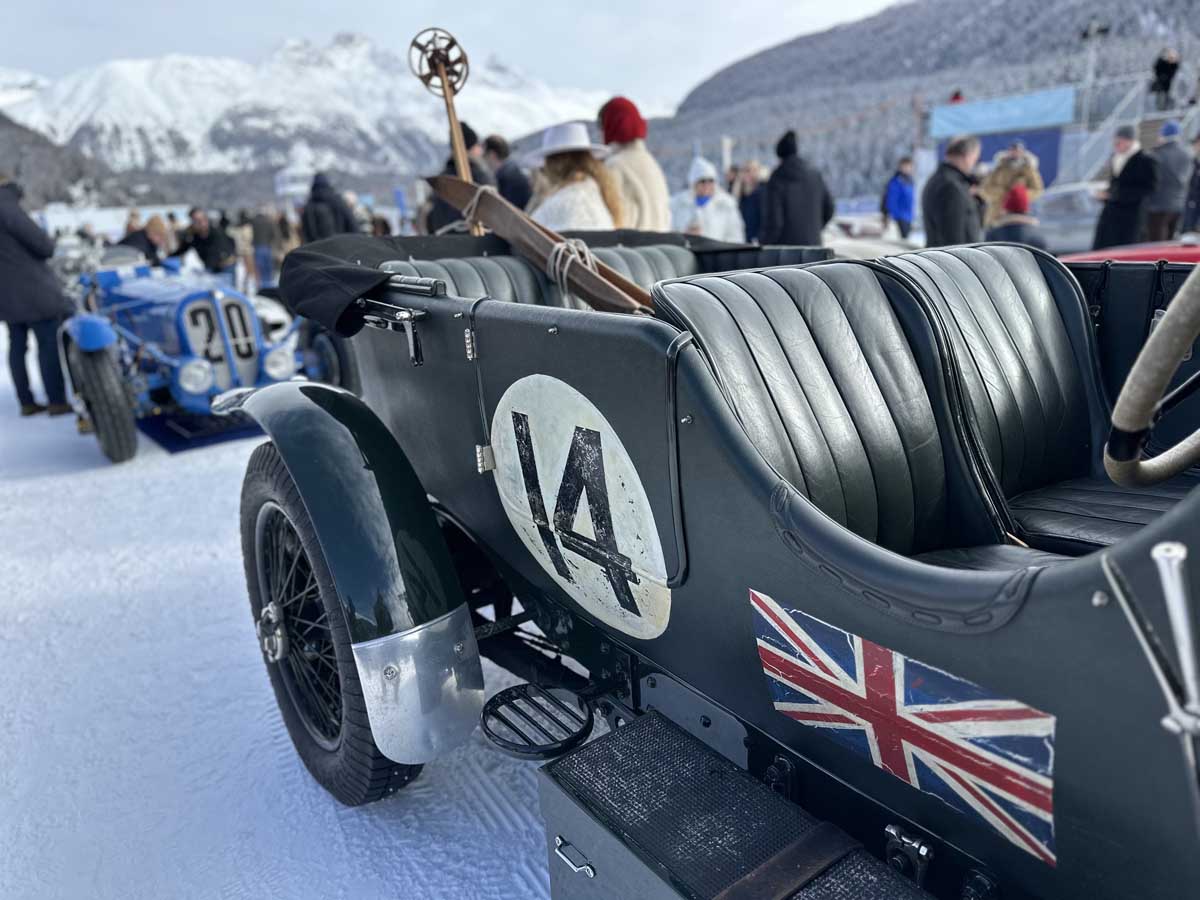
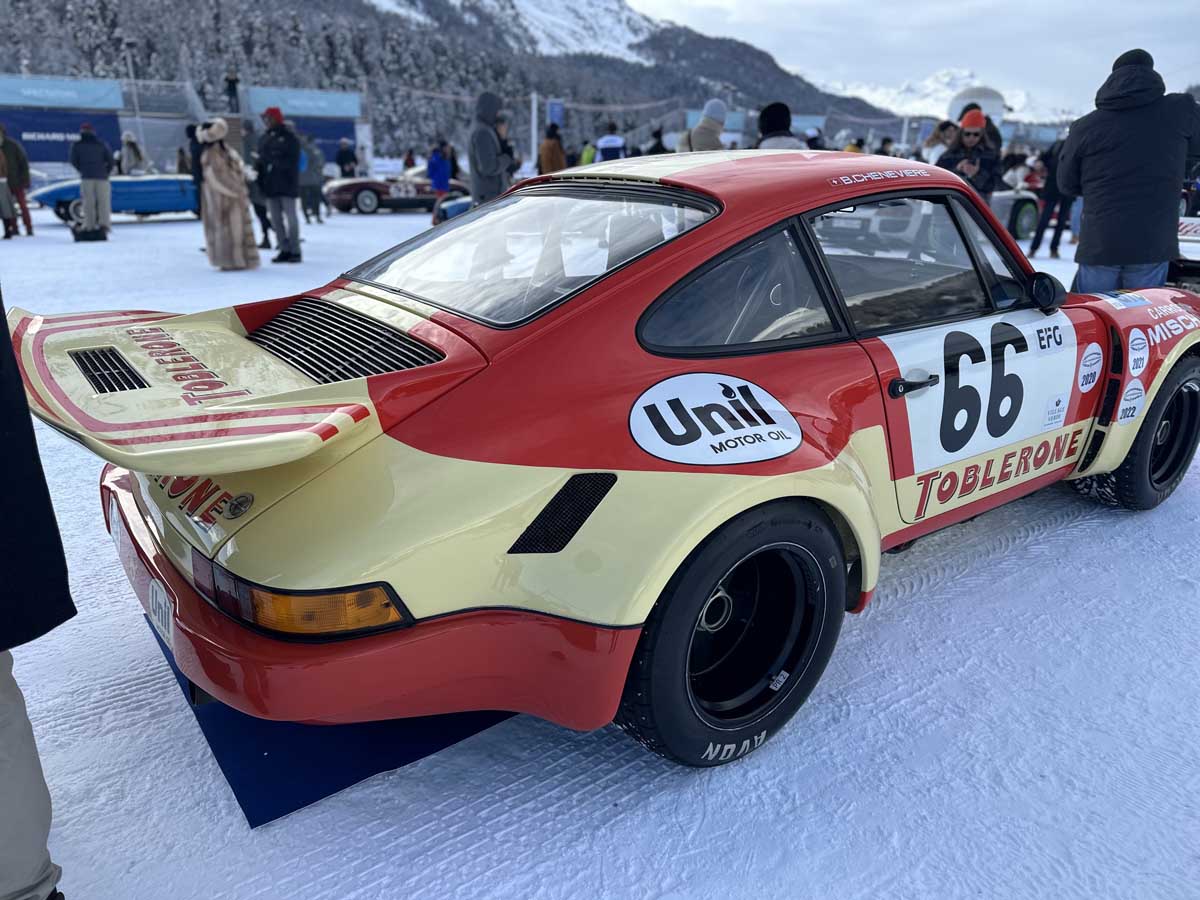
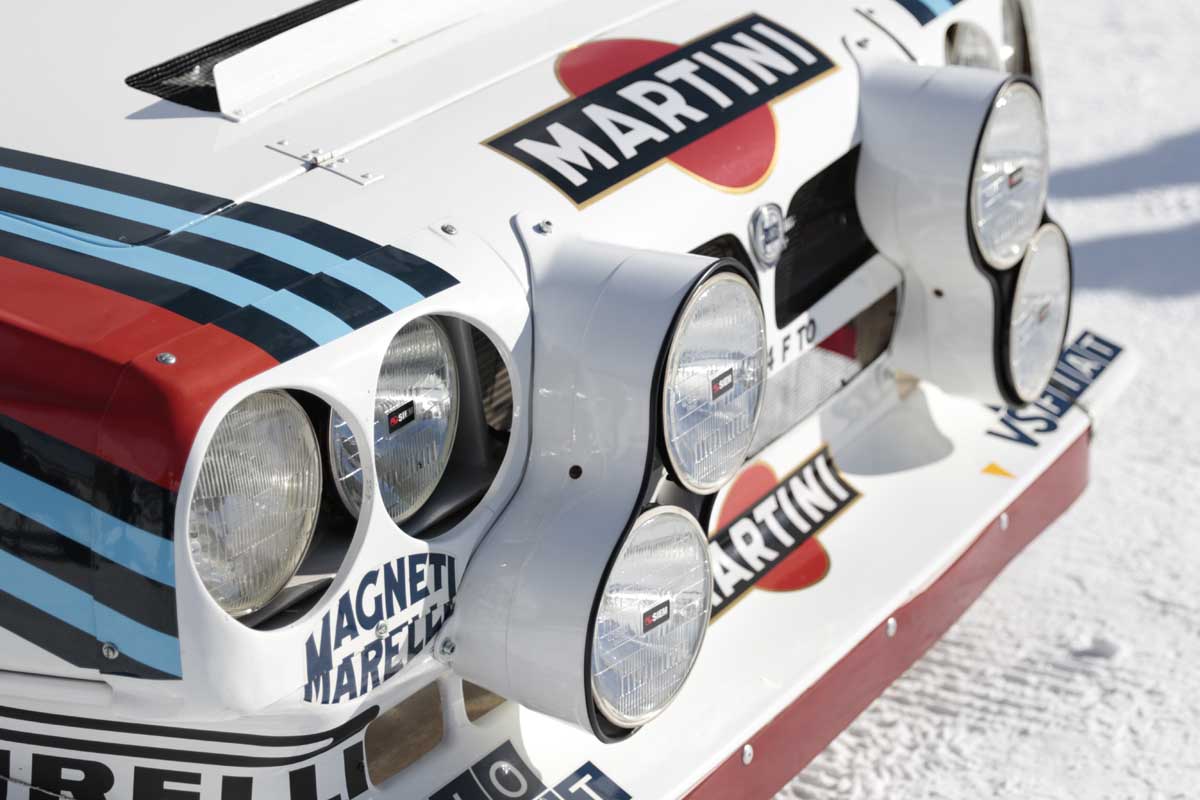
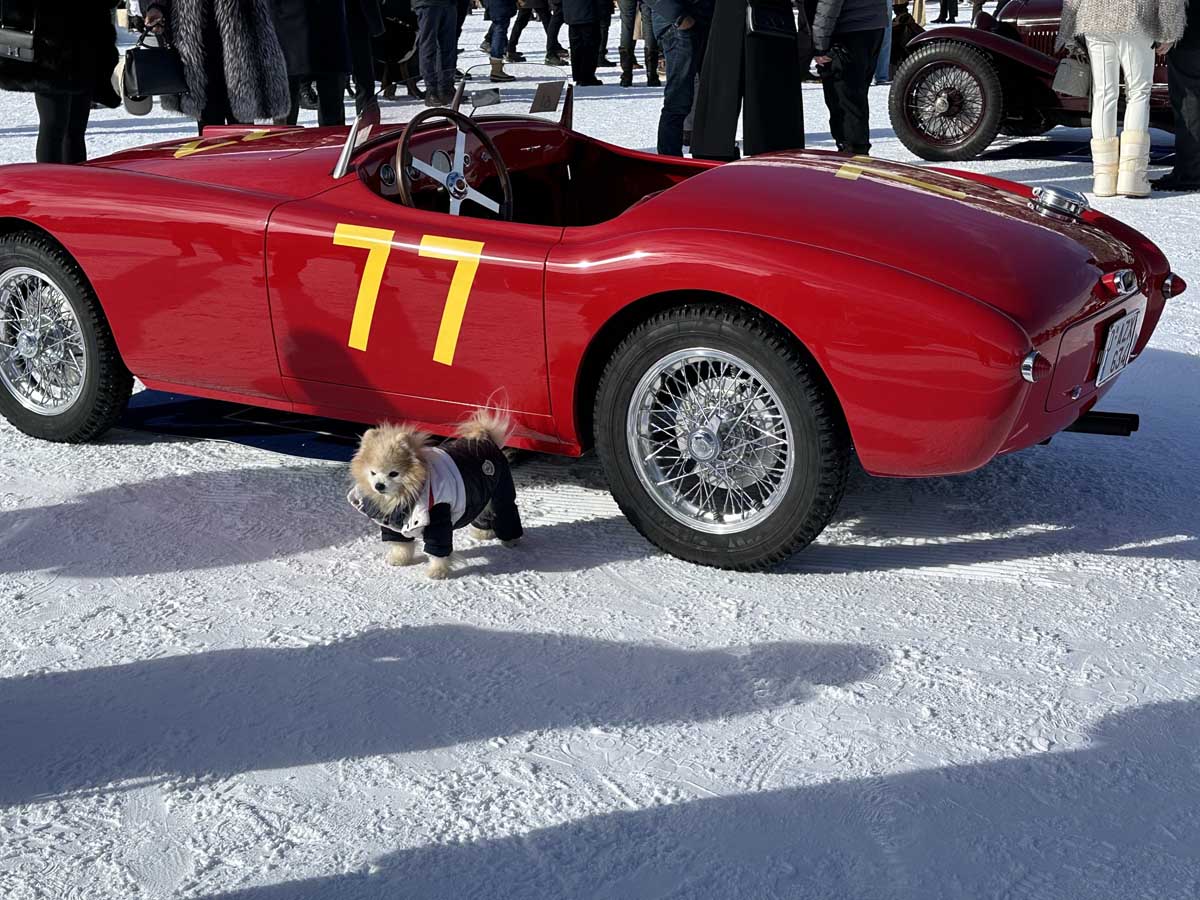
Five models were awarded “Class Winner” titles on Friday, recognising the vehicles that best represented their respective categories: Pontiac Vivant (1960s, “Best Sound”), Lancia Stratos (1970s, “Legendary Liveries”), Maserati 4CLT (1940s, “Open Wheels”), Ferrari 750 Monza (1950s, “Barchettas on the Lake”), and the Talbot-Lago T150C SS (1930s, “Icons on Wheels”). The “Birth of Hypercar” category was awarded to the Jaguar XJ220 from the early 1990s, which once held the title of the world’s fastest production car with a top speed of 341 km/h.
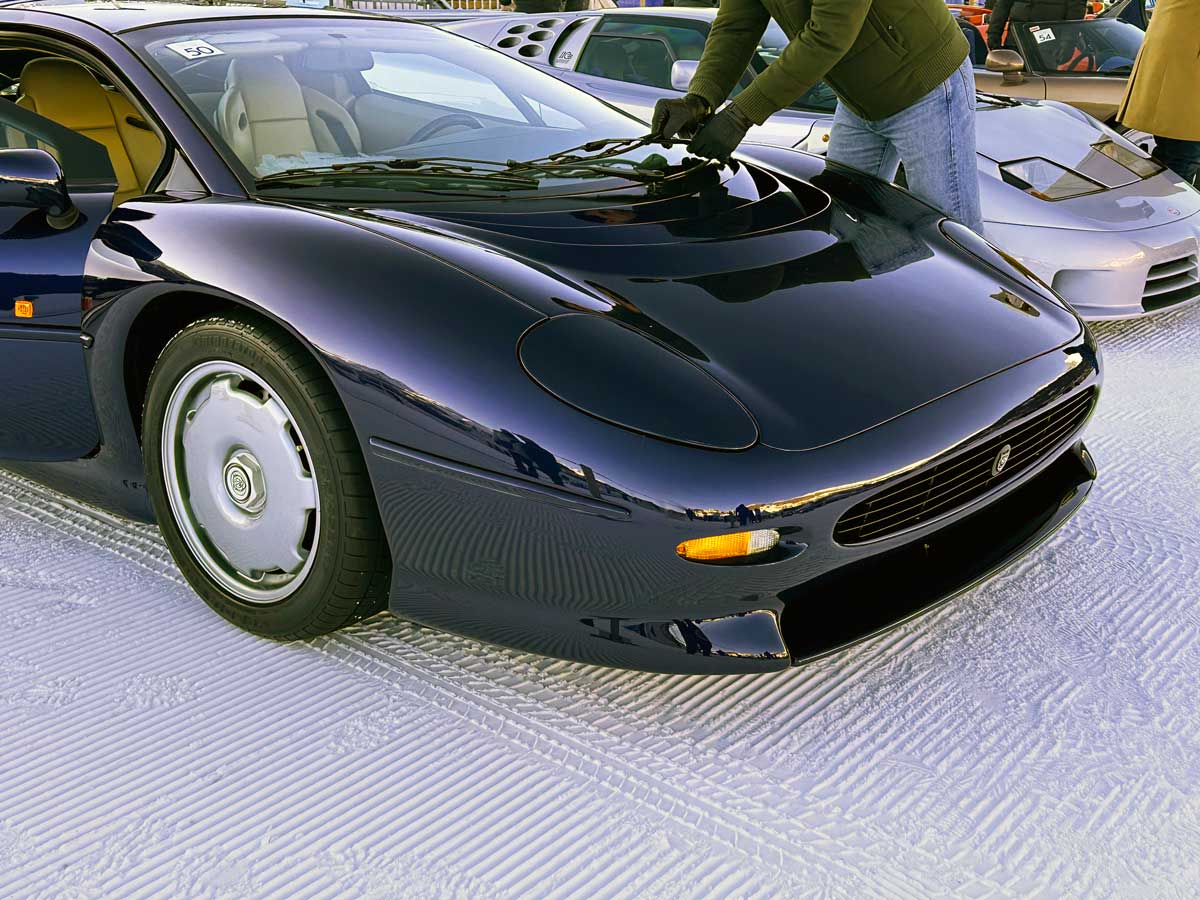
The event thus became not only a gathering of classic cars, but also of hypercar legends. To see all these evolutionary milestones brought together in one place is a rare pleasure.
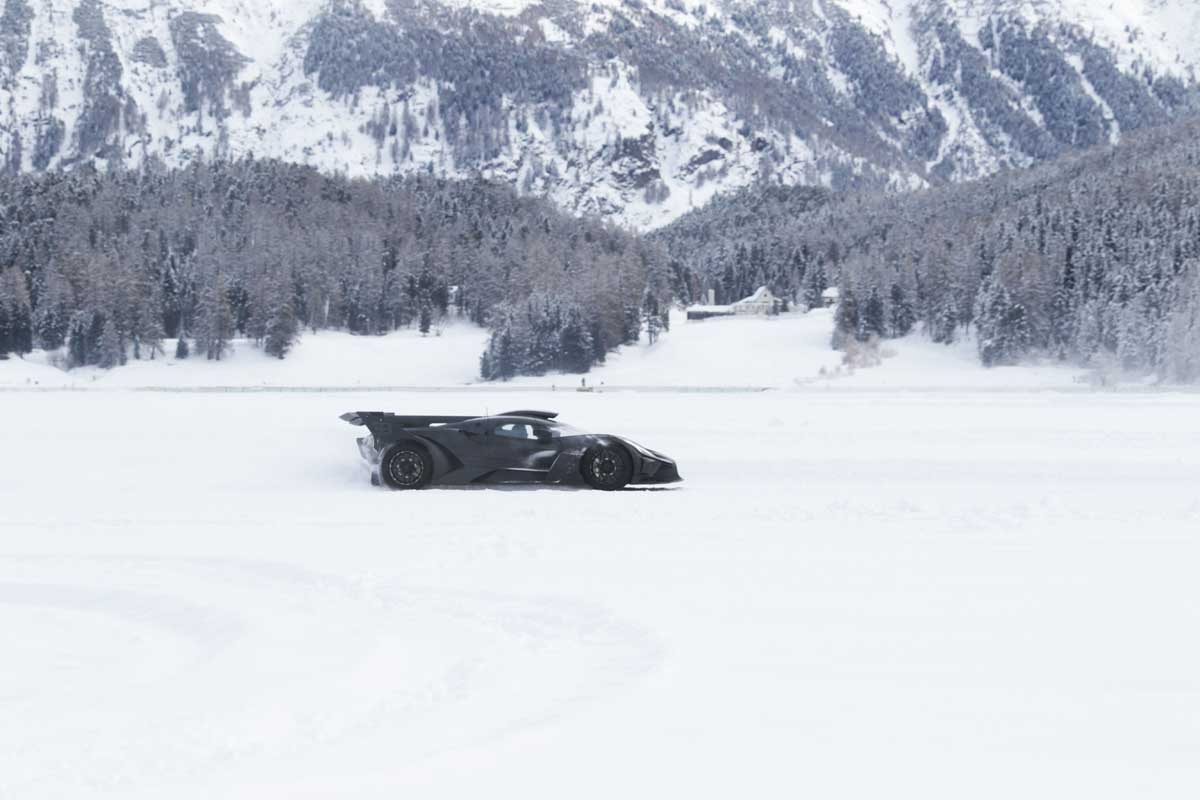
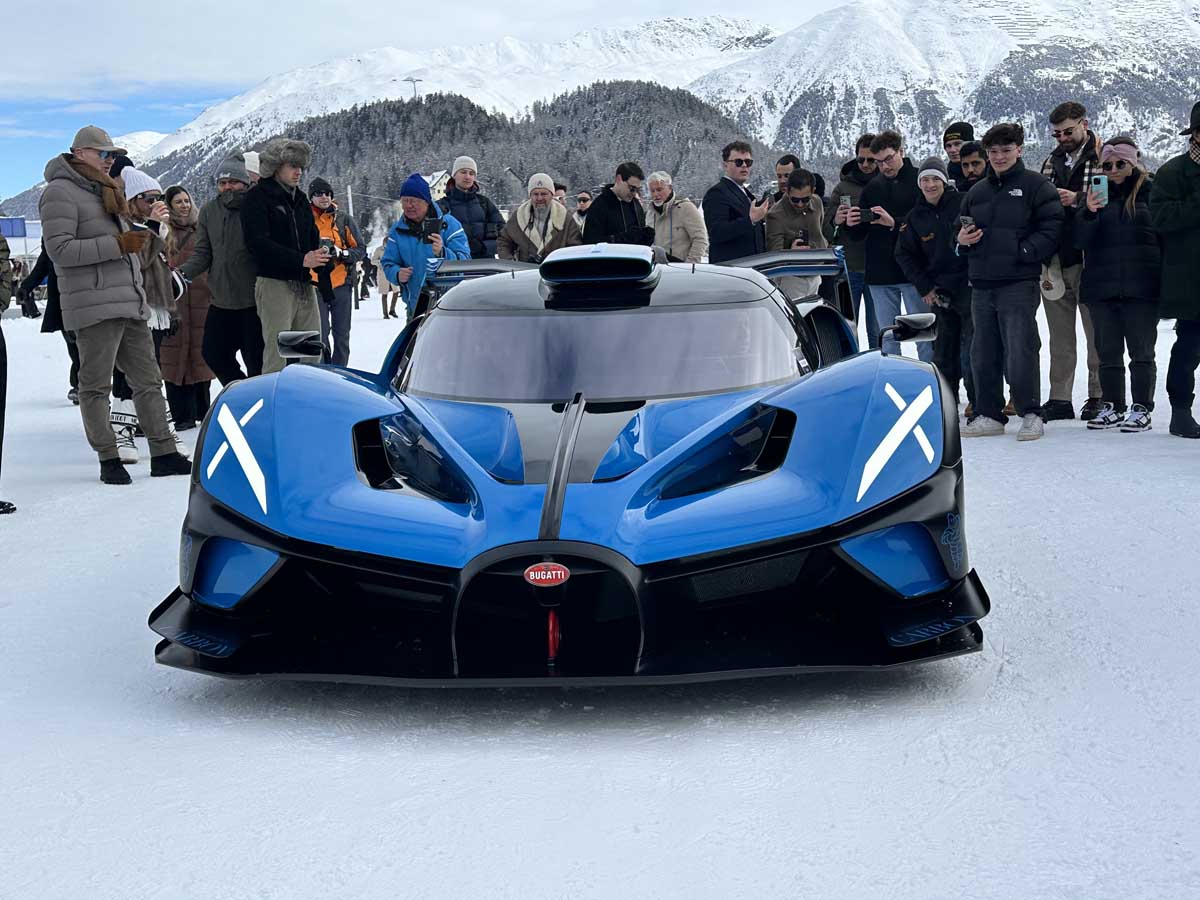
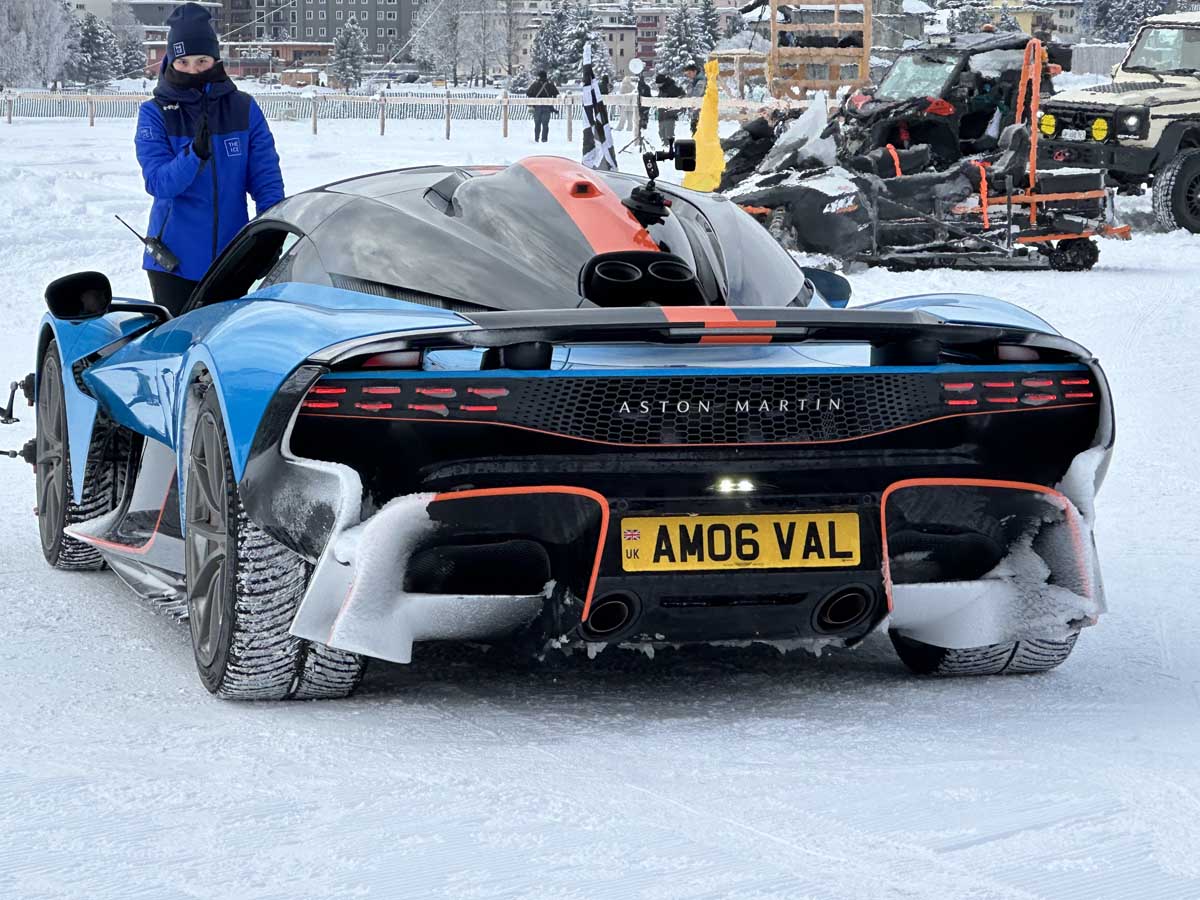
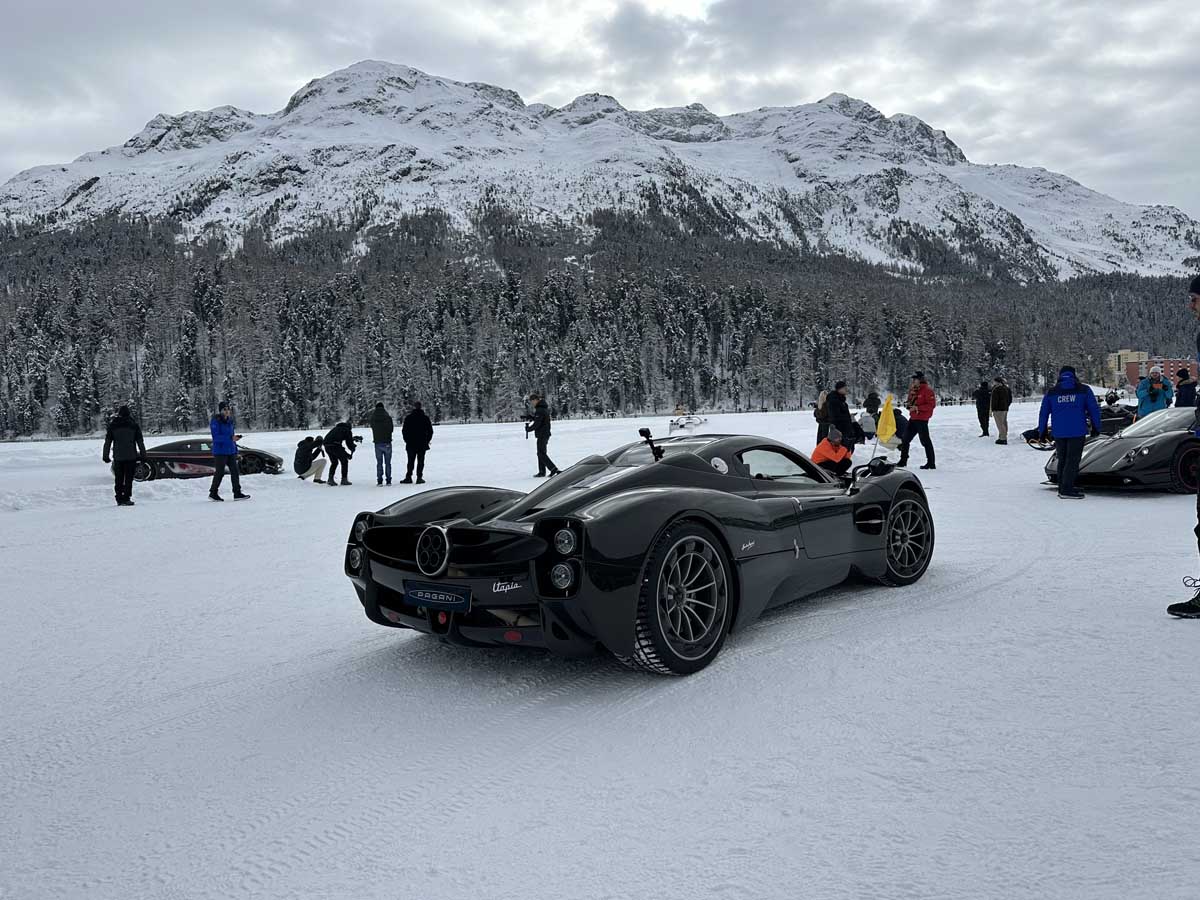
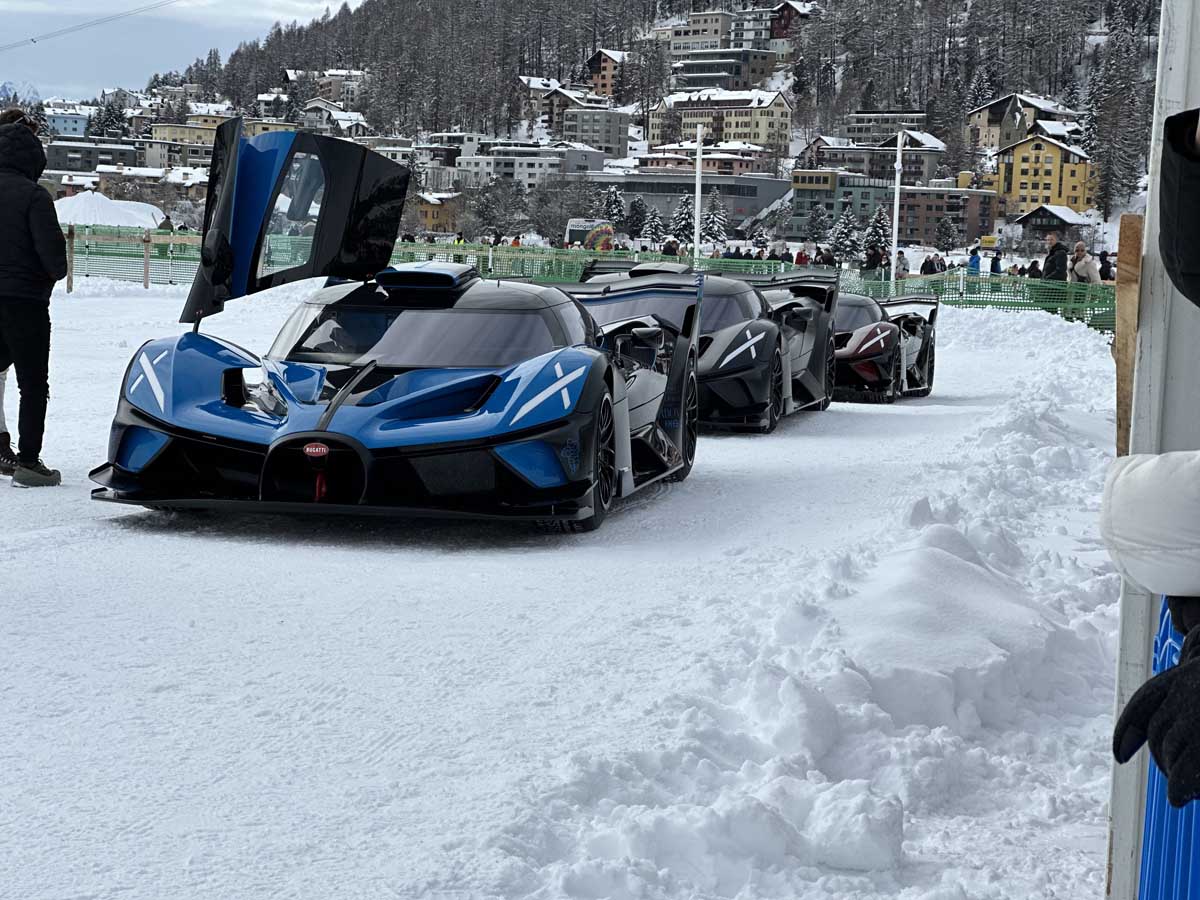
As hard as it may be to imagine, the Koenigsegg parade from the previous day was taken to an even greater extreme. The following sight is difficult to put into words: in addition to the Koenigsegg models from the day before, further extreme vehicles assembled on the racing track. Three Bugatti machines, an Aston Martin Valhalla, a Rimac Nevera, three Maserati MC20s, and a Pagani Utopia all stood simultaneously on the ice—at least 27 centimetres thick—and began circulating the track. A priceless moment.
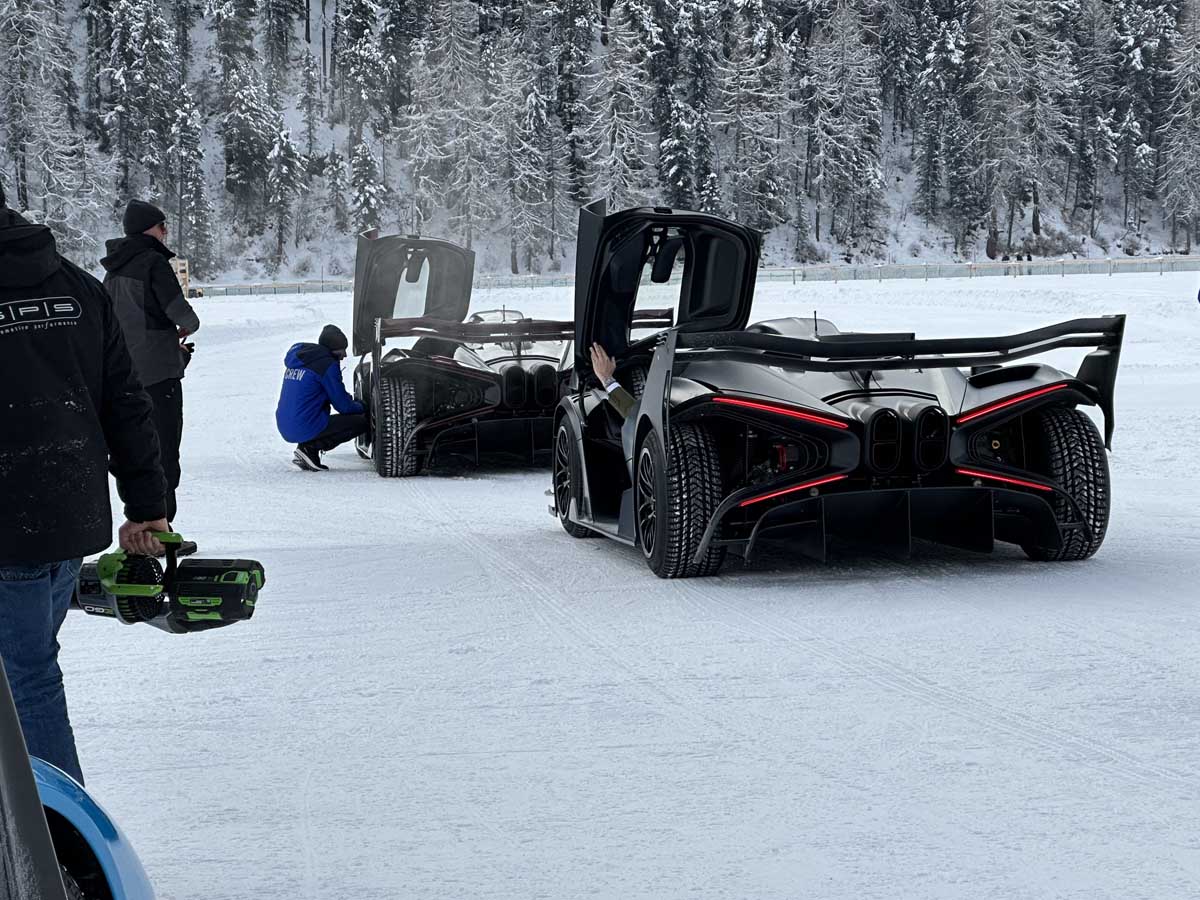
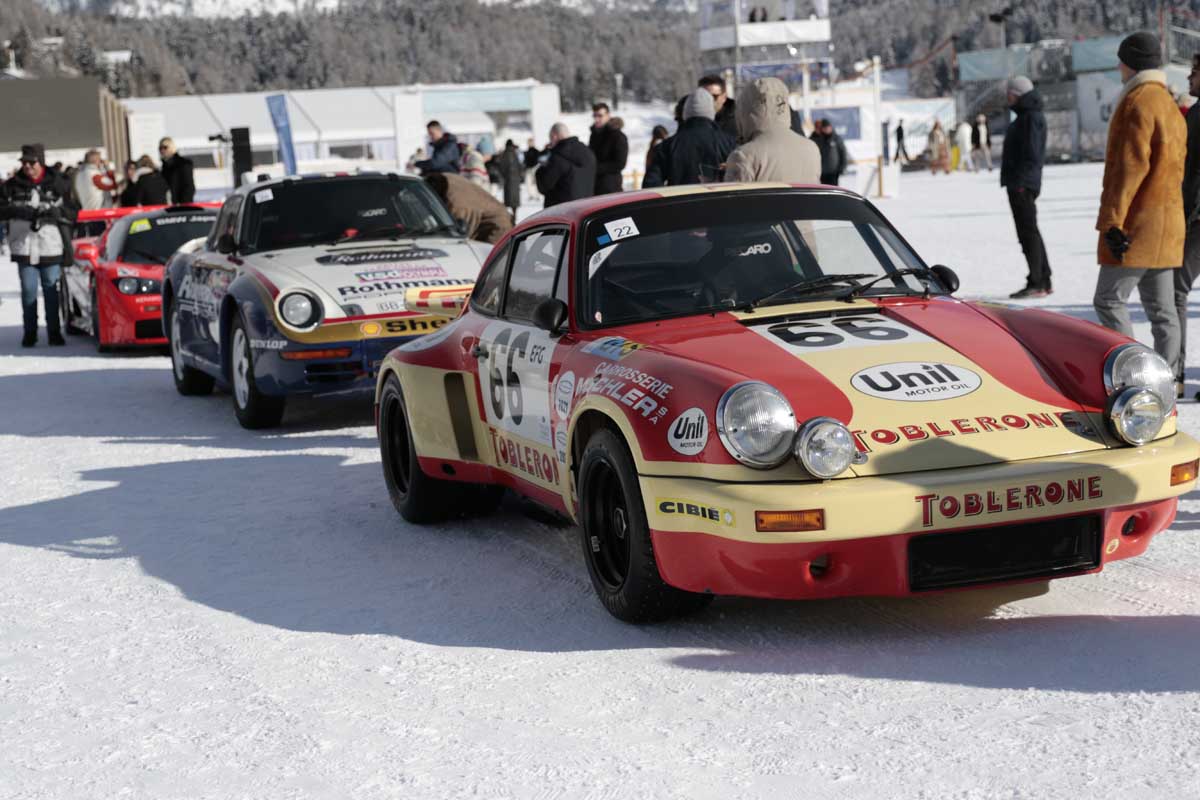
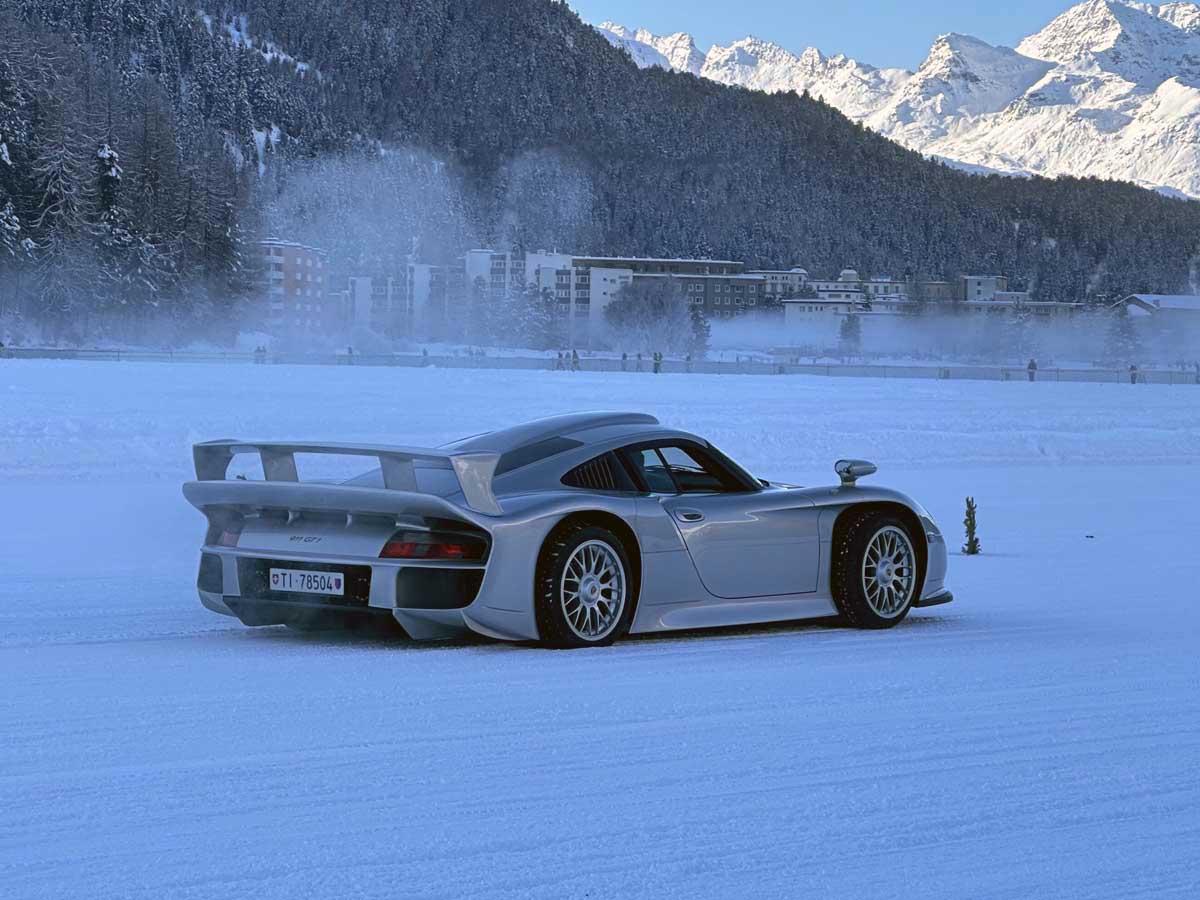
It was bitterly cold in Graubünden during these days. Morning temperatures reached minus eight degrees Celsius or lower. The second day of the event felt even colder than the first. At 9 a.m., everything was still bathed in the bluish light of early morning as visitors streamed onto the site. In the parc fermé, all the cars were already neatly lined up, preparing for the race. The sound of engines warming up was not only audible but also visible in the freezing air, forming white clouds just like the breath of the spectators. Conditions at the track were slightly hazy, with a light mist—likely caused by the ice and snow swirling up as the cars drifted through the corners. Even the historic race cars with open cockpits maintained impressive pace, delivering surprisingly high grip on the ice. The rush of air against the face must have felt brutal, and operating the mechanical, sensitive gearboxes with numb fingers under these conditions was likely more difficult than it appeared. How was this even possible? The answer may consist of a single word: passion. After all, one does not drive on a frozen lake every day alongside some of the finest and most expensive cars in existence. This was an experience even Mate Rimac did not want to miss, drifting a Bugatti EB110 SS (1994) across the lake.
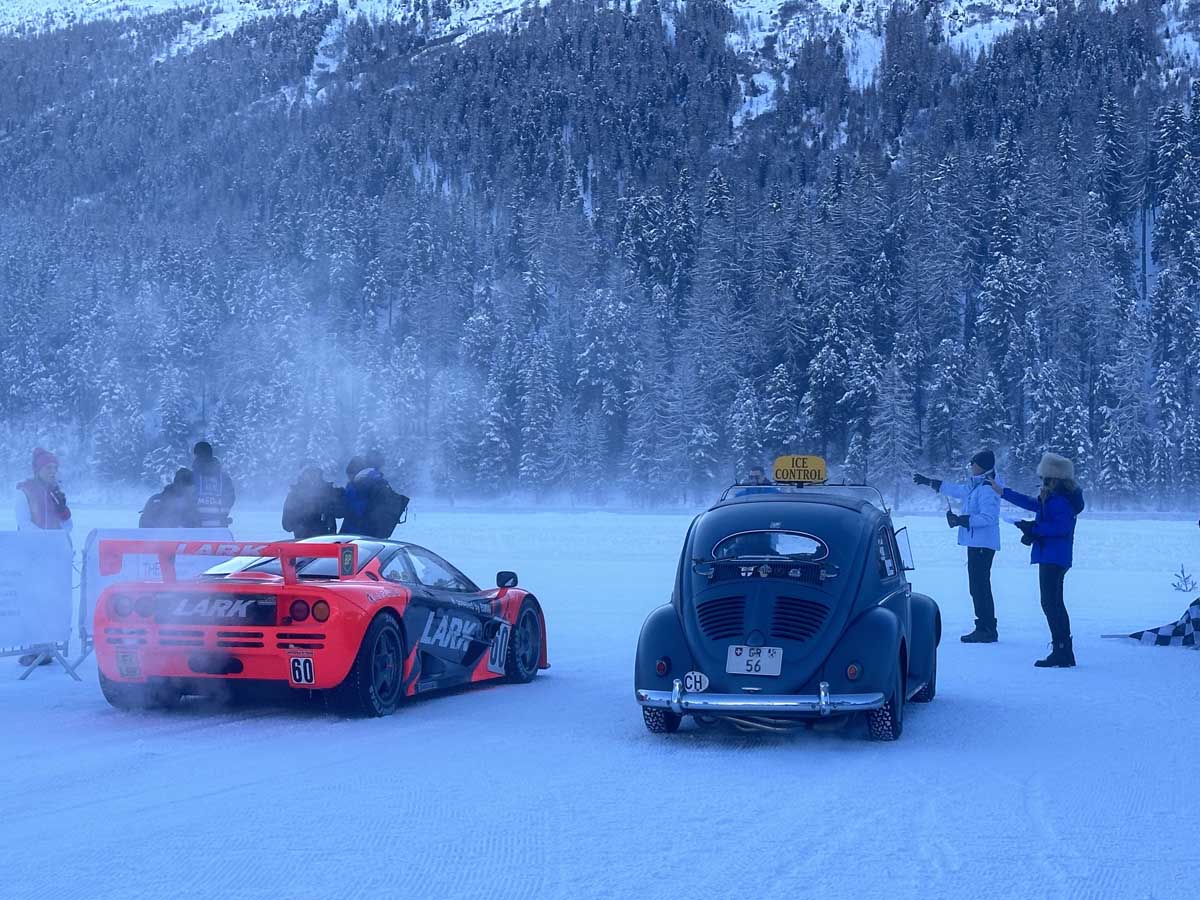
The winners of Day 2 were once again the Talbot-Lago T150C SS “Teardrop” (“Best in Show”), the Ferrari Dino 206 S (“Spirit of St. Moritz”), and the McLaren F1 GTR “Lark” (“Hero Below Zero”).
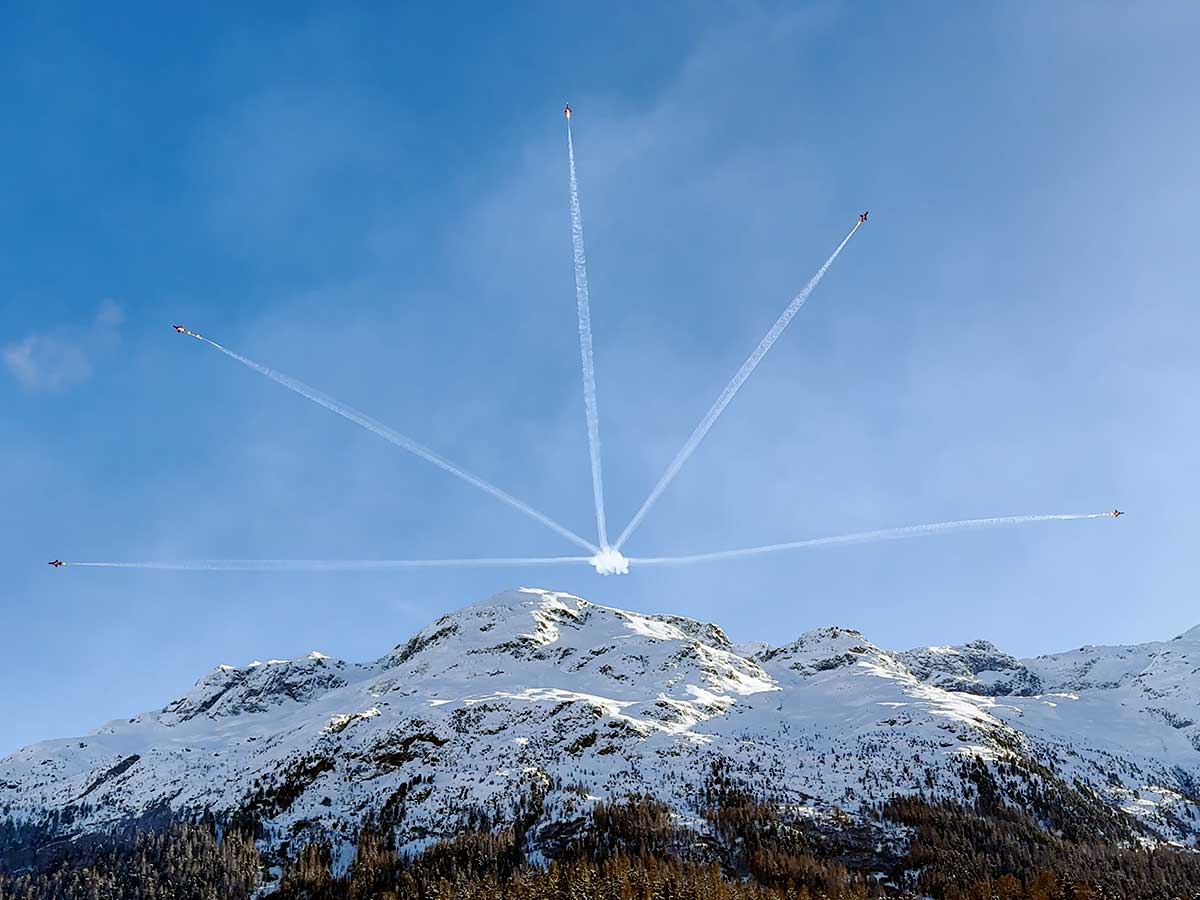
The Patrouille Suisse also delivered an absolutely spectacular performance. For more than 60 years, the Swiss Air Force aerobatic team has been showcasing its skills. Before the F-5 Tiger jets could be seen, they were heard—their sheer power. Then, in dazzling sunlight, they raced over the heads of the spectators in V formation. In this challenging terrain of alpine mountain ranges and thermal air currents, the pilots executed their precise manoeuvres, at times separated by only three to five metres. On several occasions, the aircraft split up and later rejoined. In one sequence, two jets flew directly toward each other, passing at minimal distance—one above, one below—before streaking past.
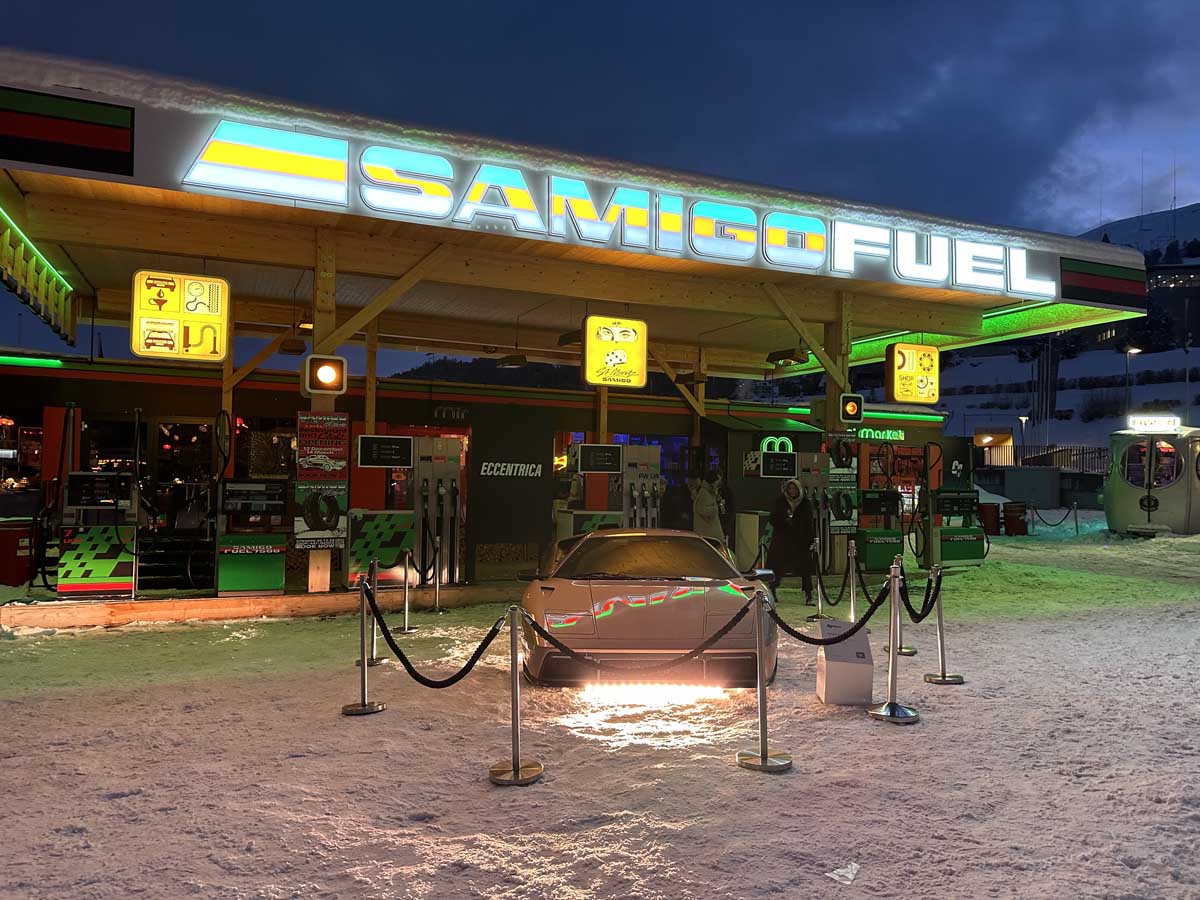
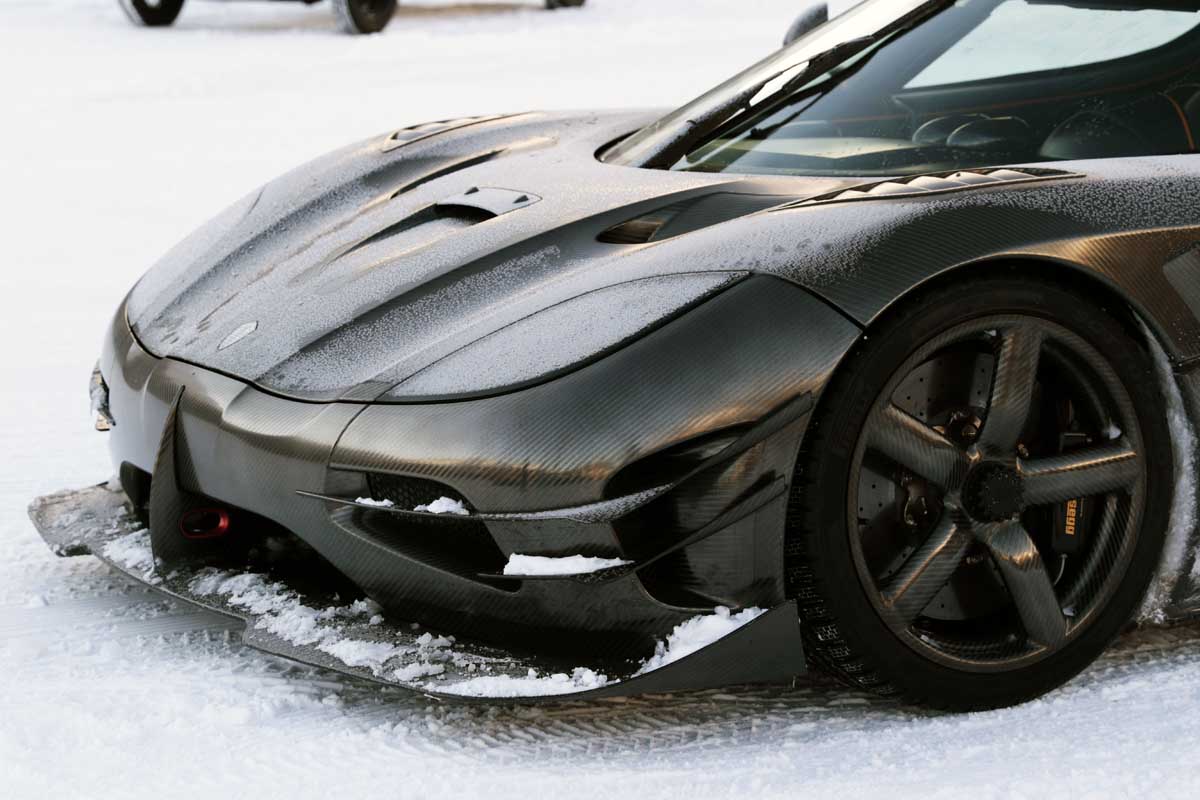
To see ice crystals on the black carbon fibre of a Koenigsegg, to hear the sound of long-silent vintage cars, to feel the heat of enthusiasm in the cold of winter—The ICE St. Moritz 2026 made all of this and more possible at its Gathering of Legends. / Written by Claudia Ryf
About The ICE St. Moritz
Website: https://theicestmoritz.ch/







 English
  Deutsch
  Français
  Italiano
  Español
  Português
  日本語
日本語