
Salone Auto Torino showed why Turin is the city of automotive design
For streetwheelz1, the Salone Auto Torino at the end of September 2025 offered three extremely diverse days. Day 1 was all about the opening of the event. On day 2, supercars took over Piazza Vittorio. And on day 3, a Concorso d’Eleganza took place in a charming, secluded village high above Turin. streetwheelz1 gained interesting insights and shares them here.

Although Turin was spared from the major storms that hit northern Italy, the downpours on the first day brought a noticeable drop in temperature—but not in the enthusiasm for cars. The show opened, and the crowds came.

Around 50 car brands with about 100 models filled Piazza Castello and the surrounding areas. Some were even available for test drives (e.g., Tesla, Hyundai, BYD, Kia). Several brands also presented Italian premieres: BMW unveiled its new SUV model iX3 for the first time in Italy. EMC Auto, Hyundai, Ioniq9, and the seat manufacturer Recaro—now collaborating with Polestar—also showcased their new products.
This year, the Chinese automaker Chery also launched its new brand Lepas, which made its European debut with the Lepas L8, a super-hybrid SUV capable of traveling around 1,300 kilometers on a single charge. The following day, the company surprised the public with a small dog-like robot that interacted with the crowd. It impressed with a standing backflip and even offered a paw. Only one real little dog, which it approached curiously, seemed unimpressed and preferred to keep its distance.
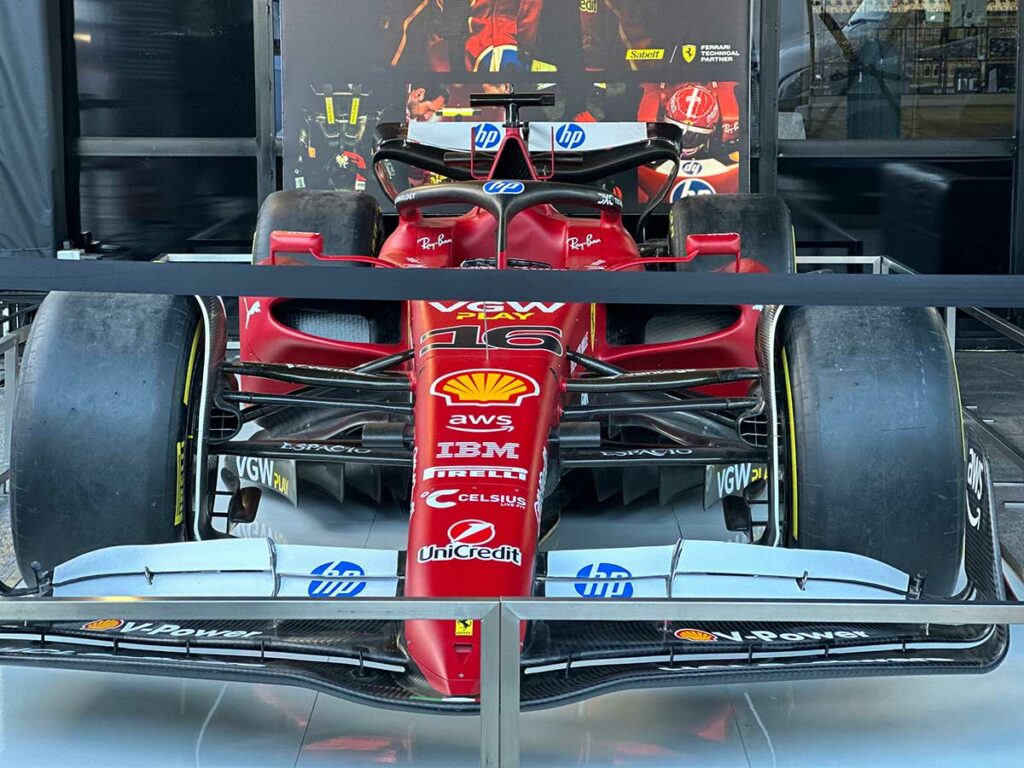
A true crowd magnet, of course, was the Ferrari stand. A long queue formed immediately. The Roma, the 365 GTB/4 Daytona, and the striking SF90 Stradale looked almost restrained next to the two racing machines that stood out with their aggressive design: the 296 Challenge, Ferrari’s newest customer racing car (the first Challenge Ferrari in history with a V6 engine), and the 499P, a Le Mans–winning hypercar prototype (24 Hours of Le Mans, 2023). Lamborghini was also present, showing a Urus, Temerario, and Revuelto, the latter drawing attention with its roaring sound and open butterfly doors.

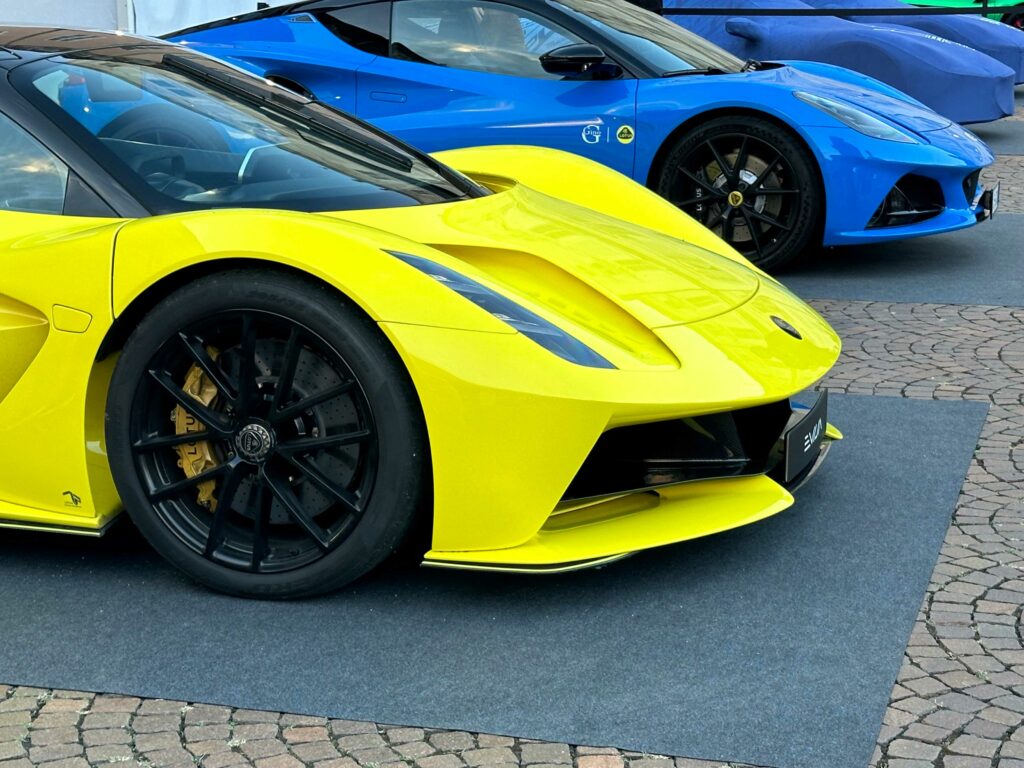
Lotus presented past and future side by side. The Emira marks the brand’s last purely combustion-powered sports car, while the fully electric Evija represents a new era. With 2,000 hp, it ranks among the world’s most powerful production cars—strictly limited to 130 units, each worth around €2 million. Maserati, too, reaffirmed its commitment to high-performance sports cars with its MC20 and MC20 Cielo, after having focused primarily on sedans and grand tourers between 2004 and 2020.

Among the purists of the supercar world was the Dallara Stradale (handcrafted, 400 hp, approx. 900 kg). The lightweight street-legal racer completely forgoes luxury extras and focuses on efficiency. With a power-to-weight ratio of about 2.1 kg per hp—equivalent to a Bugatti Chiron—it is truly a race car for the road.
The Classic Cars exhibition had remarkable depth. On the surface, it was simply a display of very attractive youngtimers and classic cars —classics from Ferrari, Lamborghini, and Alfa Romeo. But there was more to it than that. On the way to the Giardini Reali, visitors passed through the open courtyard of Palazzo Reale, where several Pininfarina-designed models were displayed: the Cisitalia 202 (1947–1952), Ferrari 308 GTB (1975–1985), Alfa Romeo 2uettottanta (2010), and Pininfarina Sergio (2013–2015). Outside, in the Giardini Reali, many more classics could be admired, including a DeLorean and a Bugatti 18/3 Chiron (1999).

The Chevrolet Corvette Nivola (1990), Lamborghini Genesis (1988), and Citroën Camargue (1972) arranged in the park were simply strikingly aesthetic. Their proportions are close to the golden ratio (1:1.6 to 1:1.7); their lines balanced and clean. It’s hard to stop looking at them. The other Bertone creations (Bertone Blitz, Saab Novanta, Autobianchi A112 Runabout, Porsche Karisma, Opel Slalom) impressed with their radical design language. Though more rounded, their shapes feel less harmonious—yet they were technologically ahead of their time. The Bertone Blitz (1992) was one of the first fully electronic sports cars. The Saab Novanta (2002) featured early versions of today’s touchscreens and digital driving aids.
During a presentation by ASI (Automobili Storici Italia), former Bertone designers discussed the essence of automotive design and Bertone’s influence. One analogy, paraphrased here, was especially memorable: When great musicians play together, the result may sound chaotic. But under the right conductor—in this case, Bertone—it becomes a masterpiece.

What makes the classic car exhibition so remarkable is its artistic significance. Turin is, after all, the city of automotive design—home to the great names Bertone, Pininfarina, and Italdesign. These companies wrote automotive history through a symbiosis of top-tier engineering and visionary design talent, creating vehicles that transcended their brands.
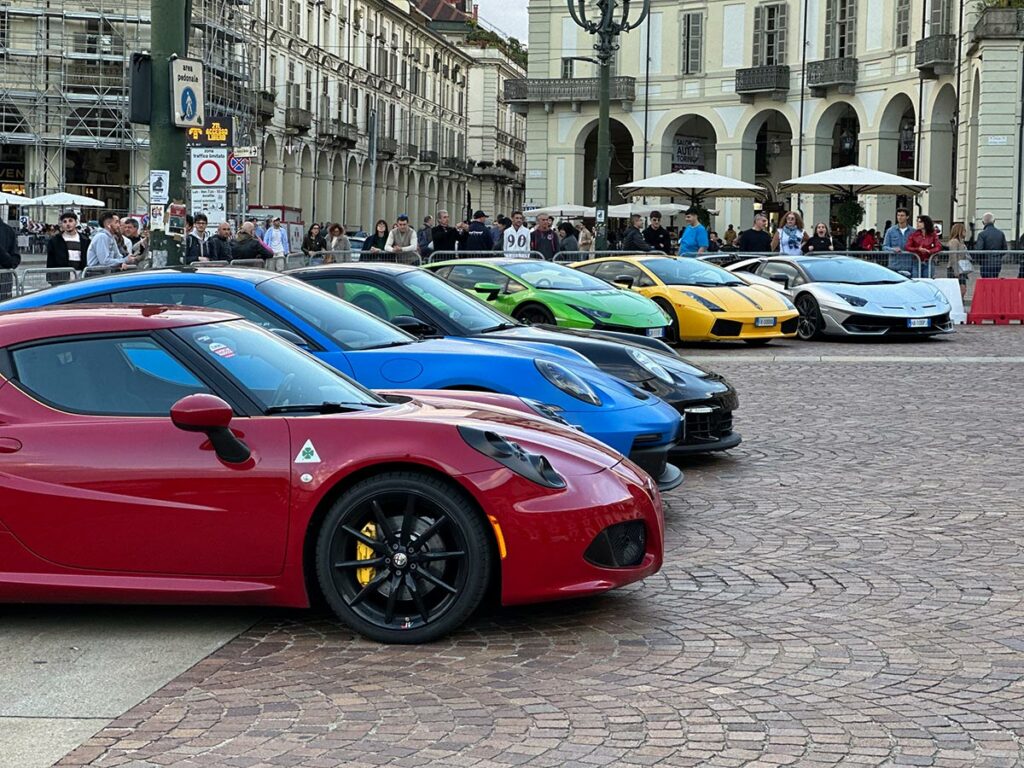
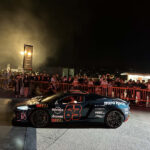
One of the highlights on the second day was the Supercar Parade. This year, it did not take place on Piazza Castello as before, but ended at Piazza Vittorio Veneto. The public interest remained immense. Models from Maserati, Ferrari, Lamborghini, and Porsche stayed on display until dusk. A particularly noteworthy one: a white Mercedes-Benz SLR McLaren Roadster (2007–2009, 1 of 520 units, approx. €450,000–600,000).
The third day was all about beauty. Revigliasco may not be Como, yet this small hillside village hosts a Concorso d’Eleganza each year as part of the Turin Auto Show—one that makes photographers’ cameras click just as feverishly as at Lake Como.
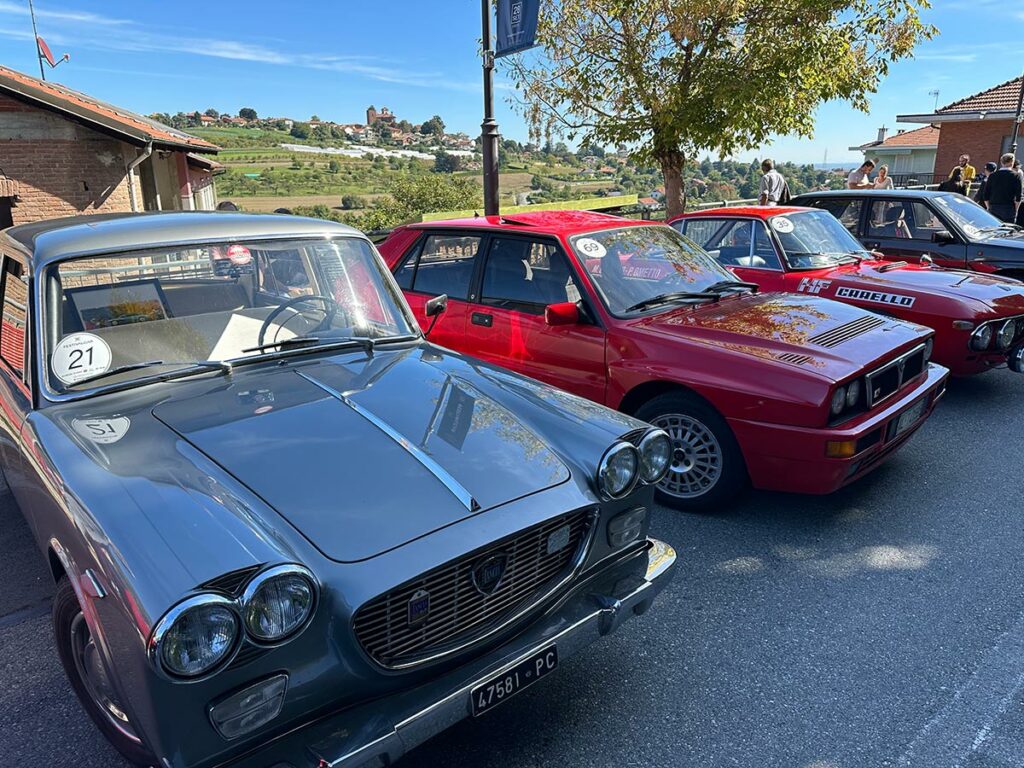
The village itself is truly picturesque. It may lack a lakeside view, but it offers sweeping vistas of the valley and surrounding hills. Reaching it, however, requires effort: a roughly 30-minute drive from Turin’s city center, winding up mountain roads through forests and small hamlets, until finally the village sign appears. But the view on arrival makes it all worthwhile. On the square stood a Ferrari Mythos by Pininfarina (1 of 2, valued at around €3 million) and a Pagani “Alisea” (1 of 1), a design concept created by students of the Istituto Europeo di Design (IED). And this was just the beginning.

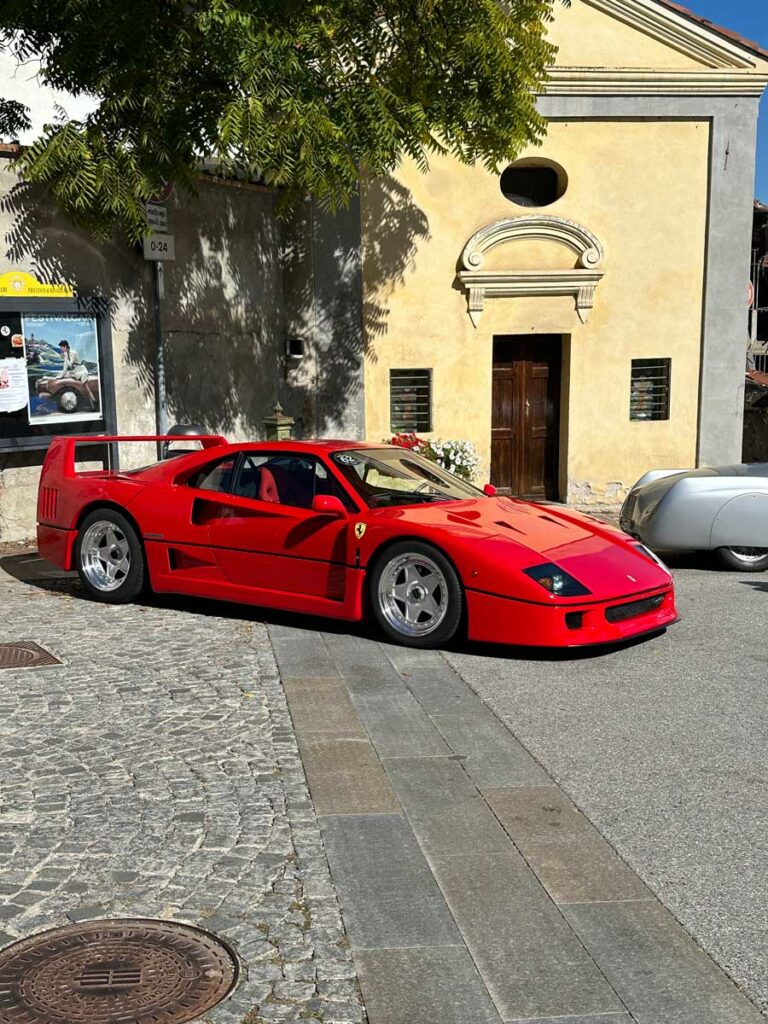
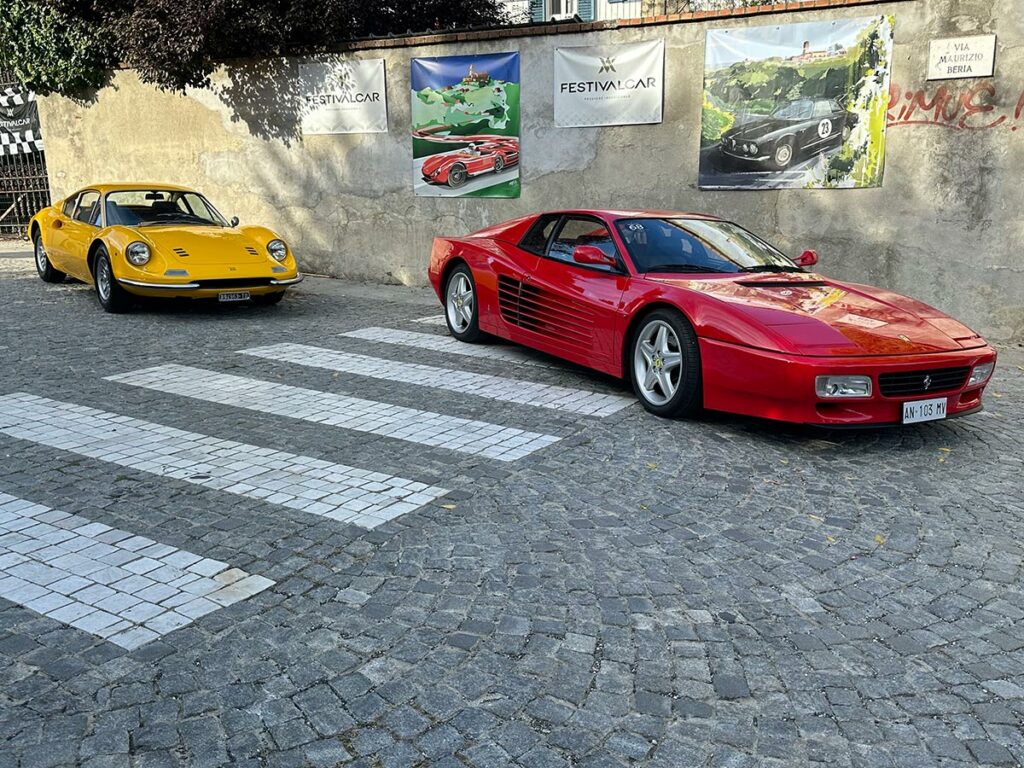
Around 11 a.m., more competitors arrived: a Ferrari Monza SP2, Ferrari F40, Lamborghini Diablo, and a Cisitalia 202 MM Spider, among others. After the parade, the cars were parked throughout the entire village—from Piazza Amerigo Sagna to Piazza Beria—lining the cobblestone streets and flower-decorated houses in a scene of rare photogenic charm. The event was framed by local culinary stands and Italian flair, accompanied by the brass band Filarmonica Moncalieri. This event still feels like a true regional secret. The winner was a Ferrari F40, though in truth, every car there was a winner.
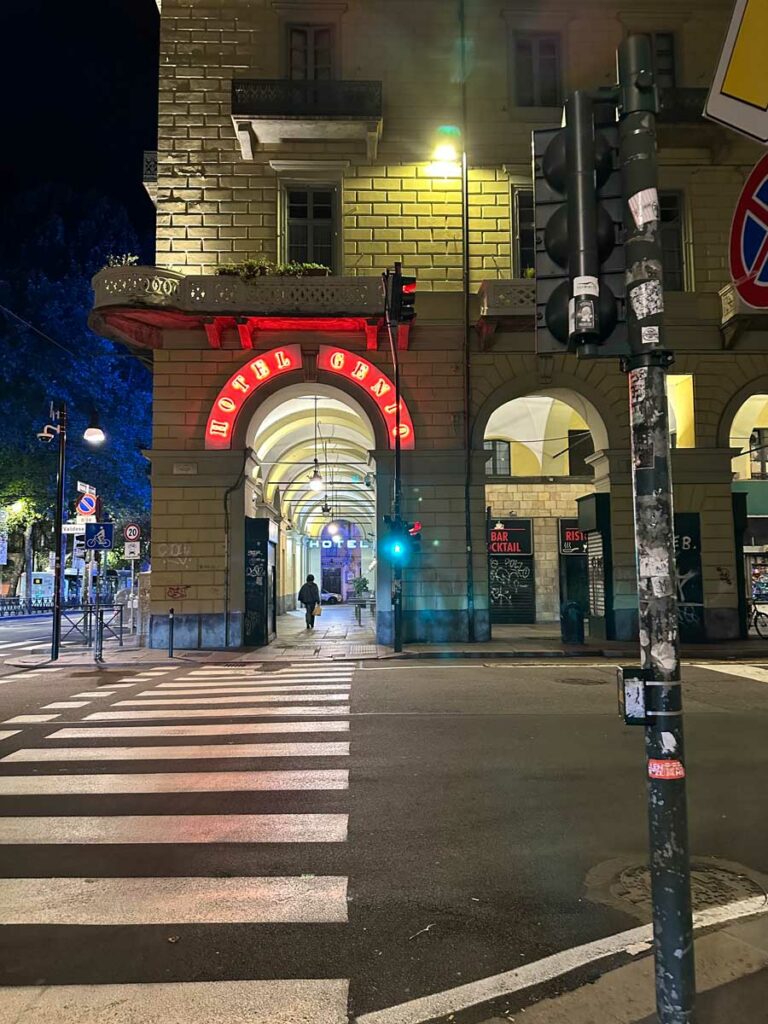
Revigliasco perfectly illustrates how effortlessly beauty manifests itself in Italy. From small villages in Piedmont to the less glamorous parts of Turin near the station—there is this innate aesthetic that seems unintentional yet reflects an eye for harmony and detail, a mosaic-like beauty that emerges without trying. If such accidental beauty is already this captivating, one can only imagine the level of perfection achieved when aesthetic intent flows deliberately into automotive design.
The Turin Auto Show undoubtedly left everyone who loves cars with beautiful memories. / Written by cr
About the Turin Auto Show:
Over three days, the Salone Auto Torino presents a free open-air exhibition across Piazza Castello, Piazza San Carlo, Piazza Vittorio Veneto, the Giardini Reali, and other central locations, featuring current models and several brand premieres.
The next edition will take place in September 2026.
More information: https://www.saloneautotorino.com/en



 English
  Deutsch
  Français
  Italiano
  Español
  Português
  日本語
日本語