
The Special Exhibition “Zurich Automobiles” is A Unique Opportunity for Car Enthusiasts
Since November 1, 2025, the temporary special exhibition “Zurich Automobiles” has opened its doors. Located in a former industrial district in Zurich-Seebach, it showcases local and extremely rare car brands that are familiar only to the most devoted vintage car fans. The vehicles were provided by both the Swiss Museum of Transport in Lucerne and private collectors. It is a rare opportunity for car enthusiasts to admire such a valuable collection in a historically significant setting. streetwheelz1 provides background insights.
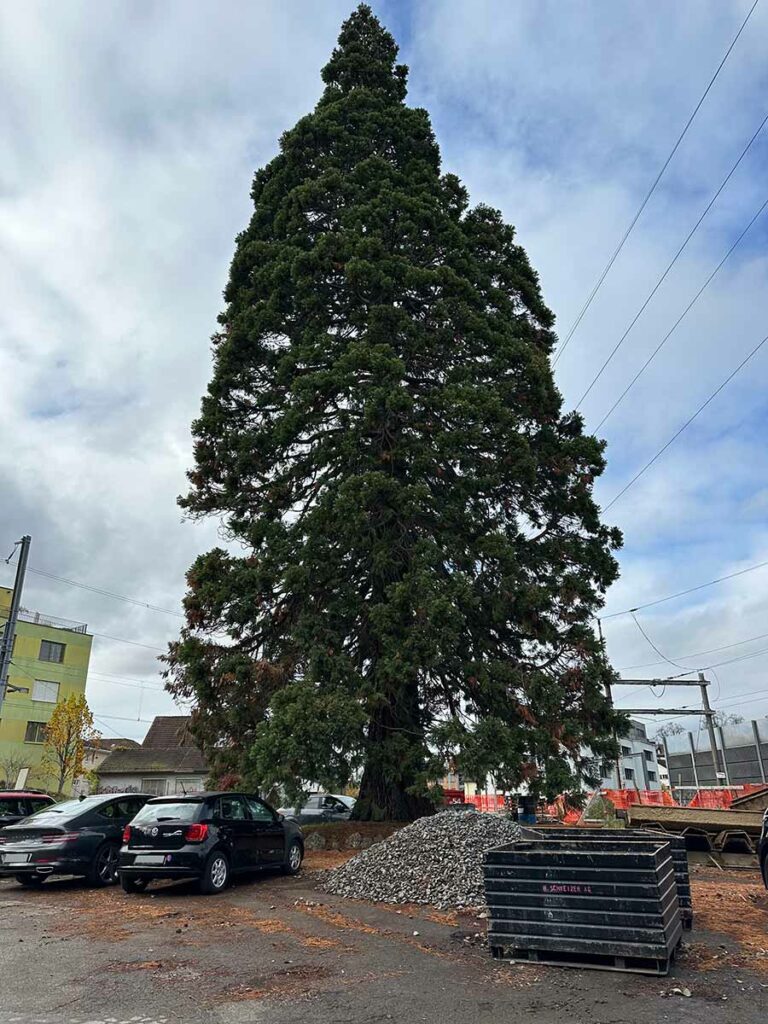
The rich history of the site of the free special exhibition “Zurich Automobiles” alone could fill entire volumes, and the majestic sequoia tree standing in front of the hall has been a constant presence for more than 100 years in an ever-changing environment.
When the Gauss-Stierli site was developed in 1899, Zurich was a completely different world. Electric light had existed for only a few years. The streets were still dominated by bicycles, horse-drawn carriages, and the newly introduced electric trams. For the city’s residents, comfort slowly began to take shape in the form of running water and a sewer system, but refrigerators, supermarkets, and radio stations did not yet exist. Even the Eiffel Tower in Paris had been built only ten years earlier.
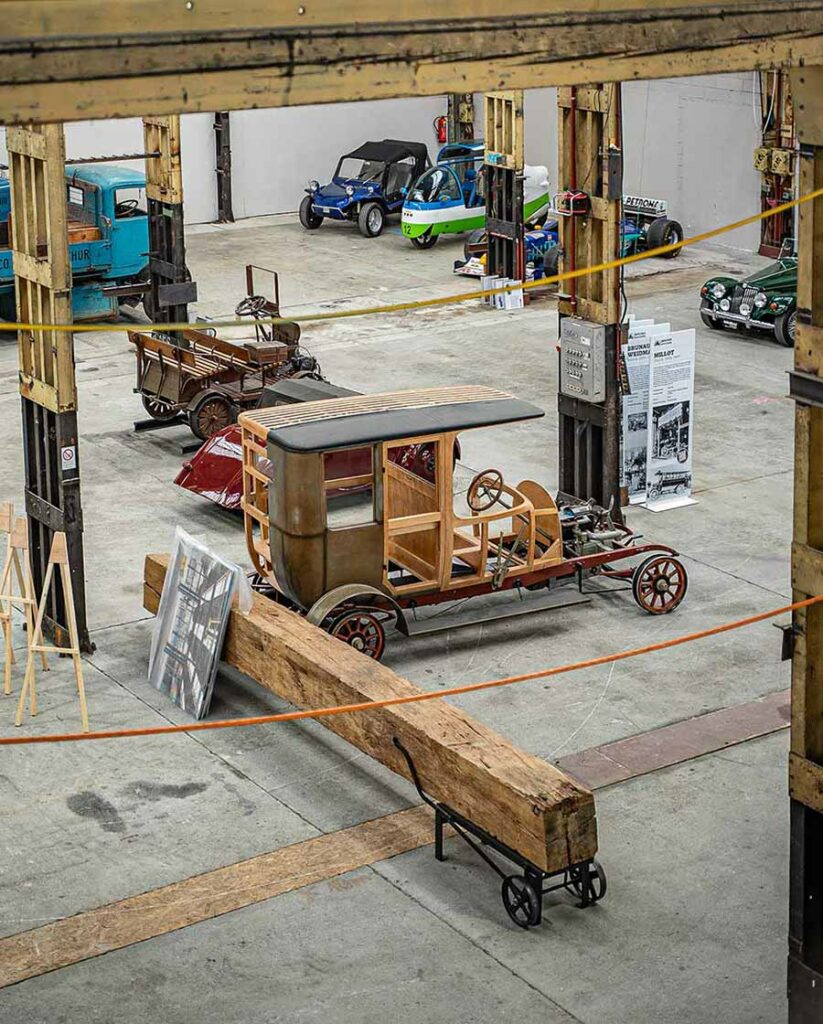
During this period, industrialization in Zurich gained momentum, and on this triangular site—roughly the size of two football fields—large halls were erected. Over the years, a variety of companies produced cast goods, elevators, wheels, machinery components, weapons, and, from 1918 onward, the legendary “Seebacher” automobiles in small series (about 80–100 units). But this era soon came to an end, and unfortunately, no SEMAG vehicle appears to have survived.
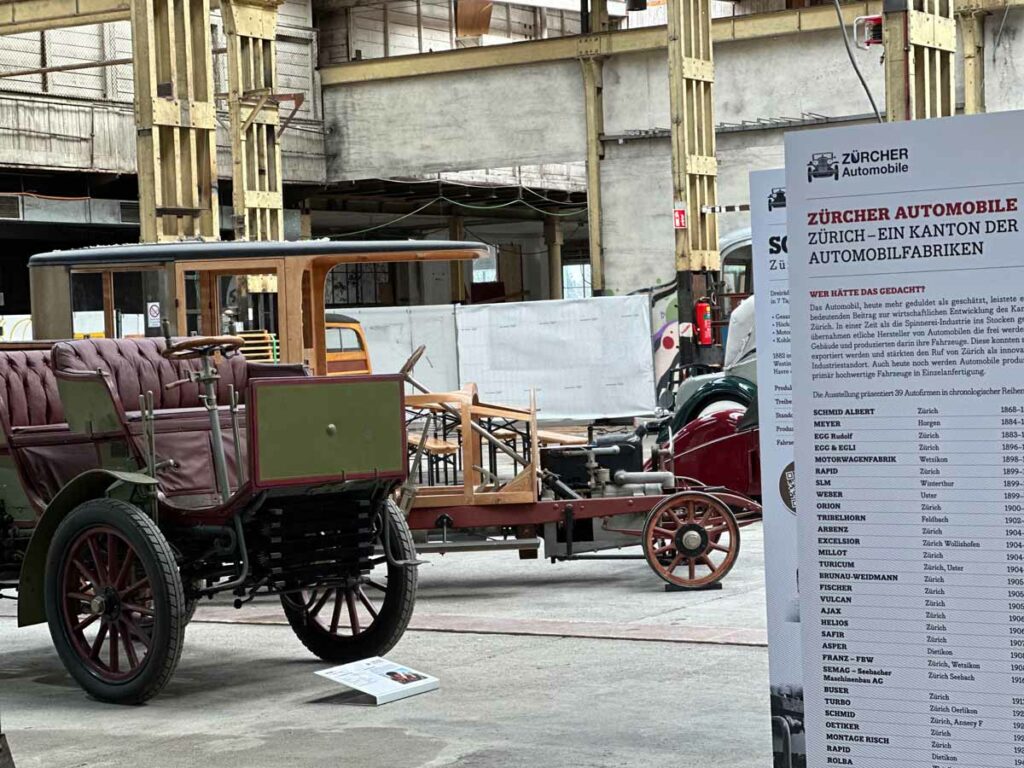
In other corners of the city and canton, car manufacturers with sometimes exotic-sounding names emerged, including Orion (1900–1910), Excelsior (1904–1907), Vulcan (from 1905), Ajax (1906–1910), Helios (1906–1910), and Safir (1907–1909). The exhibition presents information on a total of 39 car manufacturers, though certain data remain incomplete, as co-organizer Daniel Geissmann noted during the media presentation. For instance, the history of the company Buser, which produced small vehicles in 1911, remains largely obscure. Anyone with additional information about these models is invited to contribute.
A lot can happen in a hundred years. Technological progress is, as we know, disruptive. Companies and artifacts vanish—and not everyone is quick-witted enough to preserve their data for posterity. The same applies to technical devices: first useful, then obsolete. Some “early adopters” probably regret having hastily given away their first-generation iPhone (2007) or their Nintendo Game Boy (1989). Now imagine that same fate for today’s priceless vintage cars. Surprising barn finds are becoming increasingly rare.
Although most of Zurich’s early car manufacturers have disappeared, several of their models have withstood the test of time. Likewise, the pioneering personalities behind them remain remembered as innovators. The exhibition not only honors the history of the site and Zurich’s automotive legacy but also dedicates a portrait to Rudolf Egg, who, at just 27, designed a motorized carriage for his own use starting in 1883 and later founded a motorcar factory.
The pioneering spirit of Zurich’s car builders blends perfectly with the mindset of unconventional real estate entrepreneur Werner Hofmann, who purchased the Gauss-Stierli site this autumn and initiated the exhibition. As Hofmann explained in his media address, he has a very personal connection to this place and to the Gauss company. When, as a young man, he set out to establish his own plumbing business, entrepreneur Kurt Gauss showed him precisely the generosity and openness he needed during that crucial phase. It is a gesture Hofmann has never forgotten, even decades later.
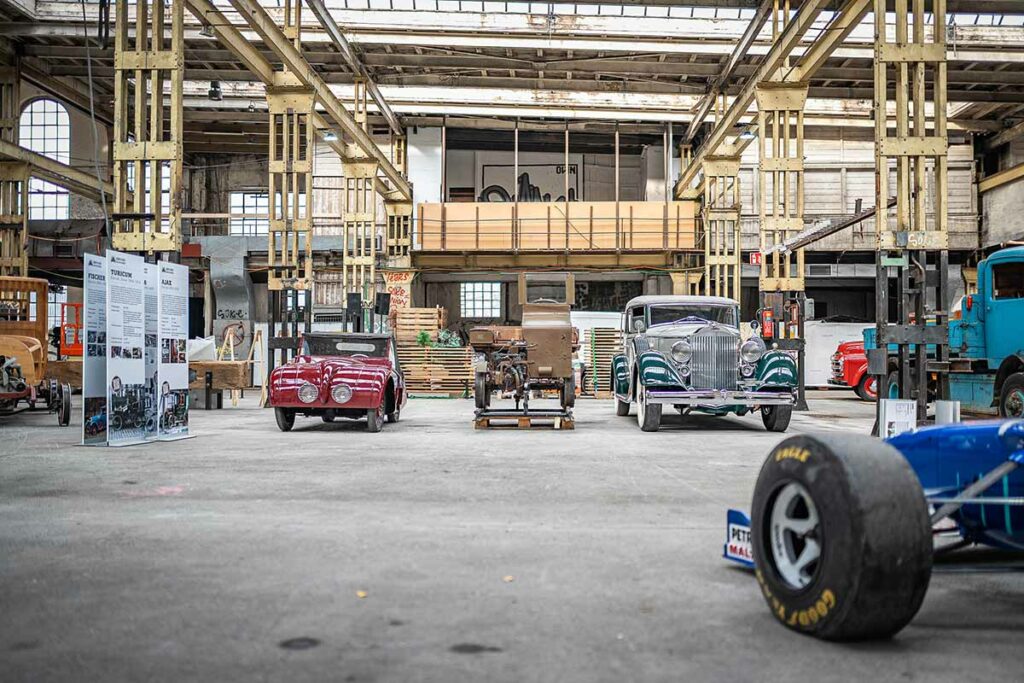
Yet, for all the nostalgia and attachment, one does not simply acquire such a valuable property. Werner Hofmann is a man with vision, intent on preserving and purposefully revitalizing the Gauss-Stierli site. He conceived the idea of referencing the industrial halls’ history and their role in Zurich’s automotive origins. In a remarkably short time, and together with co-organizers Daniel Geissmann (Swiss Historic Vehicle Federation) and Bernd Link (Swiss Classic World Lucerne), he curated the data of Zurich’s car manufacturers and their vehicles. More than a dozen of these exceptionally rare automobiles are on display—many of them for the first time ever. While some have previously been exhibited at the Swiss Museum of Transport in Lucerne, others were kept in private collections and are now being publicly shown for the first time. It is truly a once-in-a-lifetime opportunity to see these cars up close.

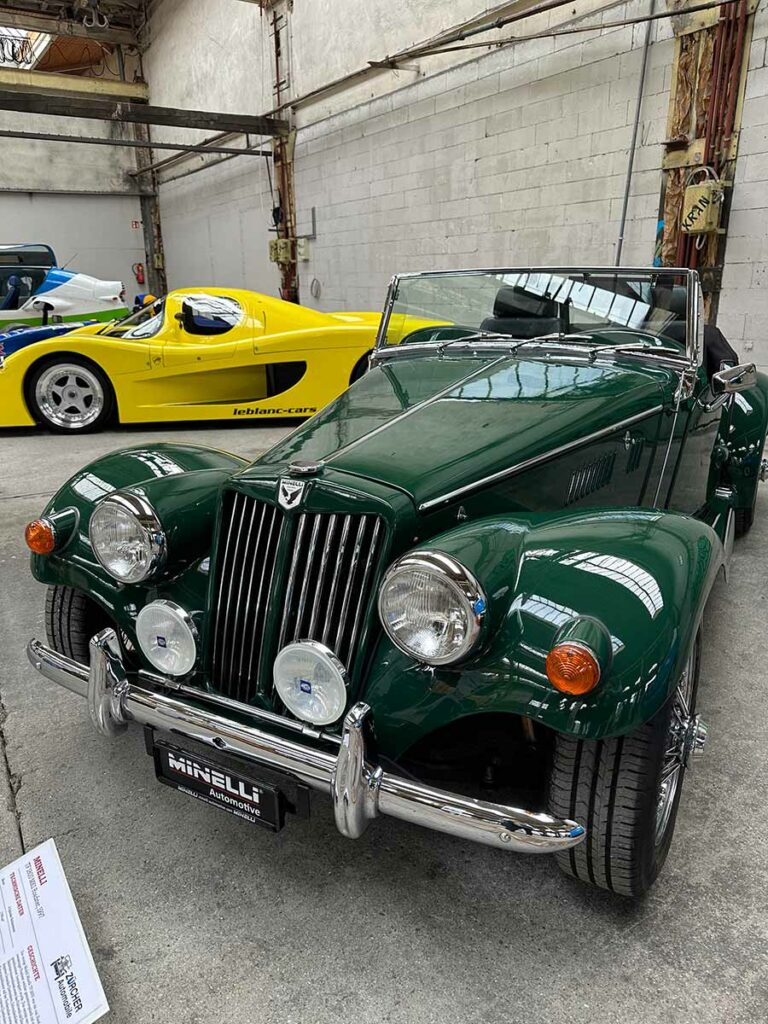
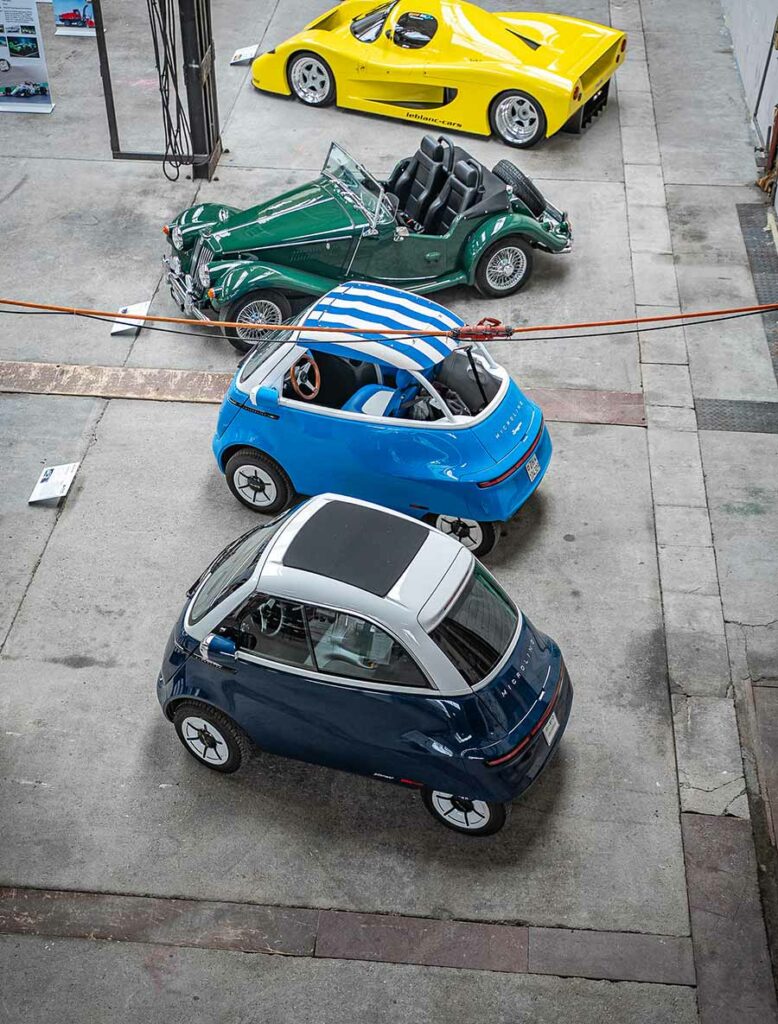
Alongside the historic vehicles, there are also youngtimers and modern exhibits. Several examples of the clever Microlino cars (since 2022) are on display, as well as one of only sixteen ever built Minelli models (1998–2001). Motorsport fans will appreciate a Leblanc Mirabeau (1999–2011) and a racing car from Sauber (1969–2025).
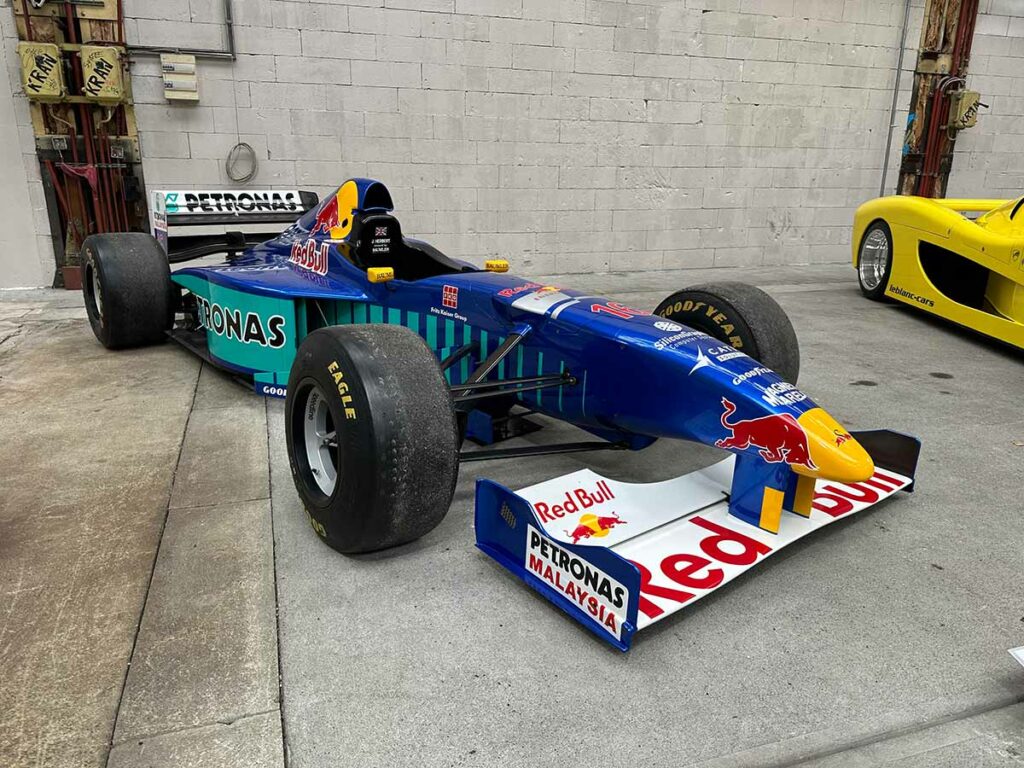
The buildings of the Gauss-Stierli site are covered inside and out with graffiti tags, and some interiors exude an almost “lost place” atmosphere, making the location even more intriguing. A graffiti on the façade captures it perfectly: “Times goes by.” Time passes, but sometimes a few bold individuals manage to preserve what truly matters. // Written by CR
Video: A Look Inside the Exhibition
Exhibition Information
Admission is free. A voluntary collection supports the “young4vintage” campaign of the Swiss Historic Vehicle Federation (SHVF). Official website of the exhibition: https://www.gauss-stierli.ch/zurcher-automobile-galerie
The exhibition also features several works by artist Ueli Knecht, who created massive metal sculptures under the title “Worker.” More information: https://www.gauss-stierli.ch/ueli-knecht
Those with ideas for the future use of the Gauss-Stierli site can submit them as part of an open competition: https://www.gauss-stierli.ch/ideen-wettbewerb
Exhibition dates:
November 1, 2025 – Saturday, 12:00–18:00
November 2, 2025 – Sunday, 12:00–17:00
November 7, 2025 – Friday, 12:00–18:00
November 8, 2025 – Saturday, 12:00–18:00
November 9, 2025 – Sunday, 12:00–17:00
November 14, 2025 – Friday, 12:00–18:00
November 15, 2025 – Saturday, 12:00–18:00
November 16, 2025 – Sunday, 12:00–17:00



 English
  Deutsch
  Français
  Italiano
  Español
  Português
  日本語
日本語